
In this guide
Finding reliable balance training gear helps improve core strength, ankle stability, and overall coordination. This guide highlights five top-performing items that support balance, rehab, and functional movement across fitness levels. Each product is selected for versatility, user comfort, and credible design. Explore options that suit home workouts, physical therapy, or rehabilitation programs, with a focus on stability, control, and durable construction.
| Product | Brand | Why It Shines |
|---|---|---|
| ProsourceFit Balance Pad | ProsourceFit | Unstable foam surface builds balance and core strength; non-toxic, non-slip |
| OPTP Dynamic Duo | OPTP | Dual-foot trainer for multi-plane movement and rehab |
| StrongTek Hedgehog Pods | StrongTek | Inflatable pods with adjustable firmness and wobble cushion |
| Aiweitey Stability Pad | Aiweitey | Thick foam with non-slip, easy to clean surface |
| BOSU Balance Ball | BOSU | Full-body platform for standing, balance, and core work |
These selections provide a spectrum of balance training tools—from simple pads to dynamic wobble boots—that can fit small spaces, rehabilitation programs, or progressive strength work. Each item emphasizes stability, proprioception, and safe progression, helping users advance from basic balance tasks to more challenging routines.
ProsourceFit Balance Pad – Non-Slip Foam Mat
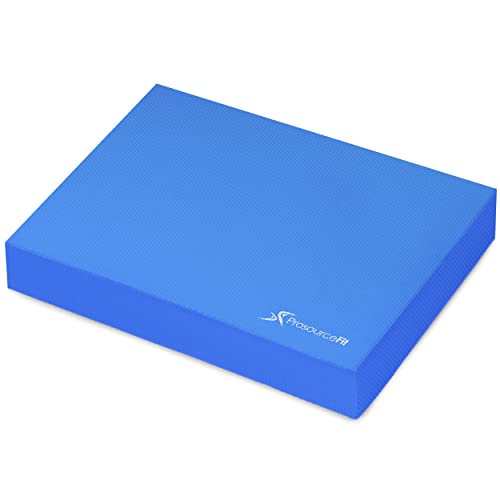
The ProsourceFit Balance Pad uses an unstable foam surface to challenge balance and core strength. The cushioning supports ankle and foot engagement while reducing knee impact during squats, lunges, or single-leg work. It’s designed for all fitness levels, making it a versatile tool for rehabilitation, athletic training, and functional movement. The material is non-toxic and sweat-resistant, which helps maintain grip during sweaty sessions. Easy to clean and store, this pad supports progressive balance routines without adding bulk to a home gym.
Key benefits include improved balance, enhanced foot and ankle stability, and greater body awareness. Because the surface is soft yet responsive, users can perform controlled movements to target stabilizer muscles. This makes the pad a practical option for beginners building confidence, as well as athletes seeking functional improvements and post-injury rehabilitation support.
OPTP Dynamic Duo Balance & Stability Trainers

The Dynamic Duo Balance & Stability Trainers provide a pair-based approach to balance training. Designed to challenge dynamic stability, these trainers help improve balance, strength, flexibility, and coordination. They’re suitable for multi-plane movements, offering a robust platform for foot and ankle strengthening as well as functional movement in diverse directions. This kit serves as a flexible alternative to traditional foam pads or wobble boards and is well-suited for physical therapy, conditioning, mind-body workouts, and rehab programs. The dual-foot design encourages symmetrical training and controlled progression.
Users can tailor the level of challenge by adjusting stance width and movement intensity. The pair also supports progressive exercises that address proprioception and balance asymmetries, which are important for athletic performance and daily activities. The kit’s versatility makes it a strong core component of a rehab-to-performance transition in home or clinical settings.
StrongTek Hedgehog Balance Pod Kit

The Hedgehog Balance Pod Kit includes four balance pods and one wobble cushion, designed for core strength, agility, and stability training. The inflatable design allows users to adjust firmness, accommodating rehab needs and progressive balance challenges. Each pod measures 6.25 inches in diameter and 3.5 inches tall, providing ample surface area for various foot positions and dynamic movements. The inflation adjustment makes it easy to customize resistance for beginners through advanced users, enabling more controlled or more demanding workouts as balance improves.
This set is particularly useful for physical therapy and rehabilitation, where stable but adaptable equipment is valuable. The pods’ larger size supports comfortable stance and broader movement without feeling restrictive, while the included wobble cushion adds variety for seated or standing balance drills. The inflatable feature also simplifies storage and transport for home use.
Stability Trainer Pad
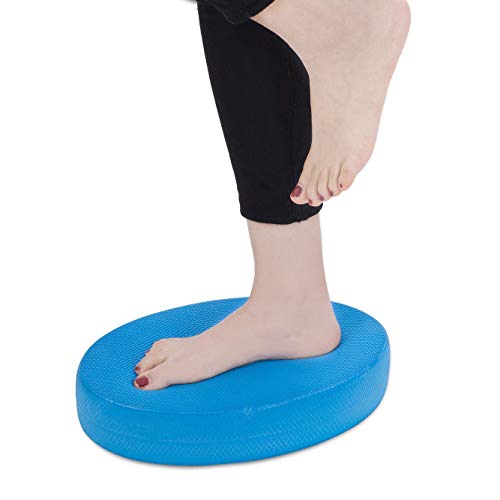
The Stability Trainer Pad by Aiweitey delivers a thick, soft foam surface with a non-slip, water-resistant finish. It supports ankle stability, knee relief, and elbow comfort during balance-focused routines. The pad’s non-absorbent material makes it easy to wipe clean after sweaty sessions, which is helpful for frequent use in home gyms or clinics. Its cushiony feel suits beginners who are building confidence in balance tasks, while still offering enough resistance for more advanced balance and Pilates-inspired exercises.
With a non-slip design, the Aiweitey pad helps maintain grip on various floor surfaces, reducing the risk of slipping during transitions between poses and drills. It’s a practical, low-profile option when space is limited but a stable, forgiving surface is needed for foot and leg alignment work, dynamic balance training, and gentle proprioceptive challenges.
BOSU Balance Ball Exercise Trainer

The BOSU Balance Ball combines cardio, strength, and flexibility into one compact platform. This inflatable 26-inch balance ball engages the core and stabilizer muscles, promoting improved balance, posture, and coordination. The included guided workouts and pump facilitate setup and progression, enabling users to tailor sessions to their goals. Standing balance drills, single-leg tasks, and dynamic movements become more engaging with a versatile tool that supports progression from basic to advanced levels.
As a full-body training device, the BOSU encourages multi-planar training, offering countless exercise variations that target core stability and functional movement. Its stability features and adjustable difficulty make it a staple for home gyms, fitness studios, and rehabilitation programs where balance and proprioception are central to progress.
Buying Guide: Key Purchase Considerations for Balance Training Equipment
- Training goals: Identify whether you aim to improve core stability, ankle strength, rehab mobility, or multi-planar skills. Choose equipment that specifically supports those outcomes.
- Surface and firmness: Balance tools range from soft foam pads to inflatable pods. Consider how much challenge you want and whether you need adjustable firmness for progression or rehab needs.
- Space and portability: For home use, evaluate storage space and whether you need compact items or portable sets that travel well.
- Versatility: Look for gear that supports multiple exercises and training planes to maximize long-term value and variety in routines.
- Durability and materials: Prioritize products with durable construction and non-slip, easy-to-clean surfaces, especially for sweaty workouts or shared spaces.
- Progression options: Equipment that allows gradual increases in difficulty helps users advance safely and consistently.
- Therapy and rehab suitability: If rehab is a goal, select tools that are comfortable, stable, and appropriate for guided physical therapy protocols.
- Maintenance: Choose items with simple cleaning and storage to encourage regular use.
- Price-to-value balance: Compare the number of functions, durability, and included accessories (pumps, cushions, or example workouts) to determine overall value.
When selecting balance training gear, consider pairing a simple pad with a dynamic trainer to cover both static balance and functional, movement-based exercises. For rehabilitation, tools with adjustable firmness and clear movement options can support progressive loading and safer progression. Combining a wobble-based device with a stability pad often yields a balanced approach to core stability and proprioceptive training in home settings.