
In this guide
Finding the right bike resistance trainer can transform indoor workouts into realistic riding experiences. This guide compares top options that suit road and mountain bikes, emphasizing stability, quiet operation, and adjustable resistance. Each choice below is evaluated for ease of setup, compatibility, and performance across common indoor training scenarios.
Product Summary
| Product | Brand | Key Features | Amazon Link |
|---|---|---|---|
| Sportneer Bike Trainer | Sportneer | Wide base, 6 resistance levels, front wheel riser block, quiet operation | View |
| RAD Cycle Max Racer | RAD Cycle Products | Seven resistance levels, ultra-quiet magnet, portable and foldable | View |
| Alpcour Bike Trainer | Alpcour | Six fixed resistance levels, portable, quiet magnetic tech, low-profile base | View |
| ThinkRider X2Max | ThinkRider | Ant+/BLE, 18% tilt resistance, up to 2000W power, realistic indoor riding | View |
| CXWXC Bike Trainer | CXWXC | Foldable design, supports 26″-29″ wheels, 6-level resistance, sturdy | View |
Below are five detailed reviews of select trainers that best align with typical American home setups—balancing stability, noise, adjustability, and wheel compatibility.
Sportneer Bike Trainer With 6 Level Resistance

The Sportneer Bike Trainer offers a wide base for stability on various indoor surfaces, including carpet and hardwood. It features five adjustable anti-slip feet to level the setup, helping reduce wobble on uneven floors. A quiet resistance wheel aims to minimize noise during workouts, though tire materials influence sound levels; road bikes are generally quieter than MTB tires. With six resistance settings, this trainer lets you tailor the effort to simulate different terrains, from gentle flats to challenging climbs. The included front wheel riser block helps maintain correct geometry, which aids in comfortable, longer sessions without added strain on the neck or back.
Key considerations: ease of setup, compatibility with 26-28″ and 700C wheels, and the balance between quiet operation and resistance range. For regular indoor rides, the combination of stability, multiple resistance levels, and a simple clamp system provides a solid, reliable experience for the commuter cyclist or weekend warrior.
RAD Cycle Max Racer With Magnetic Resistance

The RAD Cycle Max Racer is praised for its quiet operation and robust stability, thanks to extra-wide legs and a sturdy frame. The internal magnet provides seven resistance levels that emulate a range of road conditions, from smooth flats to steeper grades. Its portability is a plus for cyclists who travel or want to store the trainer compactly; it folds down for easy transport and storage. Stability is highlighted as a standout feature, which can be essential for powerful sprints or high-cadence sessions, ensuring the trainer remains steady even during intense workouts.
Considerations include the strength of the magnetic resistance and how well it translates to real-world feel at higher power outputs. The trainer’s portability makes it attractive for those who train in small apartments or shared spaces, where storage space matters as much as performance. For riders who value quietness and a realistic road feel, this option offers a compelling balance of features.
Alpcour Indoor Bike Trainer
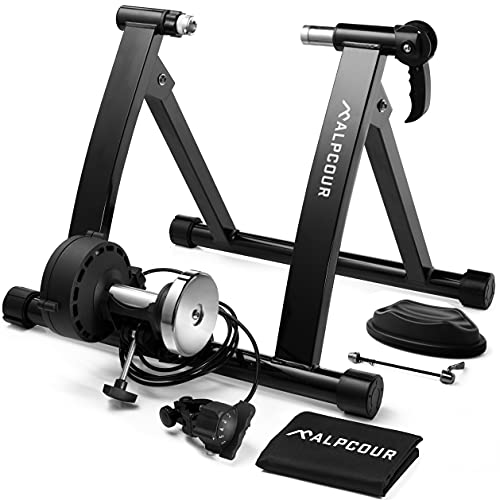
The Alpcour trainer focuses on quiet magnetic operation and six fixed resistance levels, controlled by a cable on the handlebars for quick adjustments. Its design emphasizes stability through a wide base and low stance, which helps maintain balance on various floor types. The trainer is described as highly durable with a focus on reducing friction to prolong bike life. A notable benefit is its inclusion of a front wheel riser, which aids in bike geometry and overall ride feel during indoor workouts. This model is suitable for riders who want a realistic, low-noise experience without complicated setup.
Buying considerations include how often you intend to train indoors, the types of bikes you own (mountain vs. road), and space constraints. The smoother ride and fewer moving parts reduce maintenance, while the six resistance levels offer flexibility for endurance or interval sessions. For most users, the Alpcour provides a balanced option between quiet operation and stable performance.
ThinkRider X2Max Smart Bike Trainer

The ThinkRider X2Max brings advanced digital integration to indoor training, offering BLE and ANT+ compatibility with popular software like ZWIFT. It delivers a high power output capability (up to 2000W) and an intelligent tilt resistance of up to 18%, automatically matching the resistance to the riding map when connected to software. This improves realism and driving dynamics during simulated climbs, descents, and flats. The product is designed to be quiet and portable, making it suitable for apartment living or shared spaces where noise and space constraints matter.
Considerations for this model include software compatibility and the need for a stable mounting surface to maximize the benefits of simulated resistance. For riders who value data, analytics, and a more immersive indoor ride, the ThinkRider X2Max offers compelling capabilities that go beyond simple magnetic resistance.
CXWXC Bike Trainer For 26″-29″ Wheels
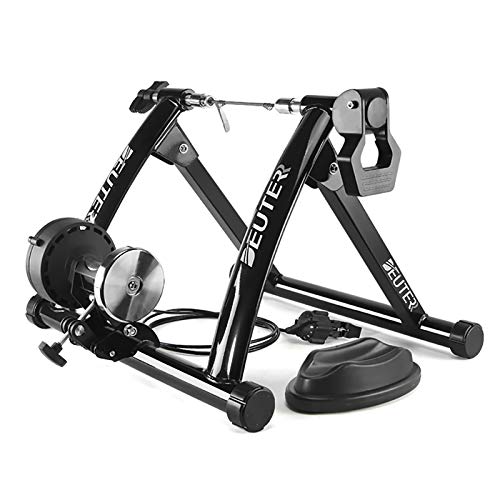
The CXWXC trainer supports 26″ to 29″ wheels including 700C, making it versatile for most adult bikes. It emphasizes a stable pyramid-like frame that improves overall durability and load-bearing capacity, supporting up to about 330 pounds. With six resistance levels, it provides a simple, direct way to adjust intensity from the handlebars via a drive-by-wire device. The foldable design aids portability and storage, which is valuable for riders with limited space.
Key considerations include wheel compatibility across a wide range of bikes and the practicality of the six resistance levels for interval training. For users who want a straightforward, sturdy trainer that’s easy to set up and move, the CXWXC is a strong option.
Buying Guide: Key Considerations For Selecting A Bike Resistance Trainer
- Wheel compatibility: Ensure the trainer supports your wheel size (common ranges include 26″-29″ and 700C). Some models also handle through-axle or QR configurations; verify compatibility with your bike’s rear dropout type.
- Resistance mechanism: Magnetic and fluid resistances are common. Magnetic systems are typically quieter and require less maintenance, while fluid resistance offers a smoother, more progressive feel at higher speeds.
- Noise and vibration: Look for models designed with noise reduction in mind and stable base designs to minimize wobble on various floor types. Front wheel risers can help with geometry and ride feel.
- Adjustability: Consider the number of resistance levels and how easily you can adjust them mid-ride. Some trainers allow bar-mounted control, others use handlebars or wireless controls.
- Portability and storage: Foldable frames and light-weight designs are advantageous for apartments or shared spaces. A compact trainer should still provide solid stability.
- Software integration: If you plan to ride with apps like Zwift, look for ANT+ or BLE compatibility and whether the trainer can automatically sync power data with your preferred software.
- Durability and weight support: Check maximum weight ratings and build materials, especially if you plan long, high-intensity sessions.
- Included accessories: Front wheel riser blocks, quick-release skewers, and storage bags add value and convenience, particularly for newcomers to indoor training.
Choosing the right trainer involves balancing the need for realistic ride feel, noise level, and space constraints. For athletes who value software integration and data-driven workouts, models like the ThinkRider X2Max offer advanced features. For those who want a straightforward, sturdy setup with quiet operation, options like the Alpcour or Sportneer provide reliable, ready-to-use performance. Regardless of choice, proper setup and regular maintenance will help maximize the trainer’s life and the quality of indoor workouts.