
In this guide
Finding the right binoculars for fishing means prioritizing waterproofing, brightness, and a comfortable view during long days on the water. This guide highlights five top options that balance durability and optical quality, helping you spot details from shore, deck, or boat.
style=”display:none;”>Summary Table
| Product | Brand | Magnification / Objective | Special Feature | Amazon Link |
|---|---|---|---|---|
| Bushnell H2O Xtreme 10×42 | Bushnell | 10×42 | Fully Multi-Coated Lenses, Waterproof | Link |
| Barska Floatmaster 7×50 | Barska | 7×50 | Floating, Buoyant and Rugged | Link |
| USCAMEL 10×50 Marine | USCAMEL | 10×50 | Rangefinder Compass, FMC BAK-4 Prisms | Link |
| HOOWAY 7×50 Marine | HOOWAY | 7×50 | Internal Rangefinder & Compass | Link |
| Occer 12×25 | occer | 12×25 | Compact, Broad Field of View | Link |
Bushnell H2O Xtreme 10×42 Compact Binoculars

The Bushnell H2O Xtreme 10×42 binoculars are designed for use on boats and near water. They feature 10×42 magnification with BaK-4 prisms and fully multi-coated glass to maximize light transmission and clarity. As a waterproof option, they are built to withstand splashes and rain, making them a reliable choice for fishing and boating scenarios. The companion upgrades from the standard H2O line emphasize improved light transmission and reduced glare, which supports longer viewing sessions in changing marine light conditions.
Barska Floatmaster 7×50 Floating Marine Binoculars

Barska’s Floatmaster 7×50 binoculars combine a classic nautical magnification with buoyant, floating design. The 7×50 optics provide a broad field of view suitable for scanning harbors, docks, and shoals. Fully multi-coated lenses and a rugged, fogproof, and waterproof shell help maintain clear images in humid or spray-prone environments. The buoyant construction is particularly beneficial if kept on a boat or in a wet environment where drops are likely.
USCAMEL 10×50 Marine Binoculars
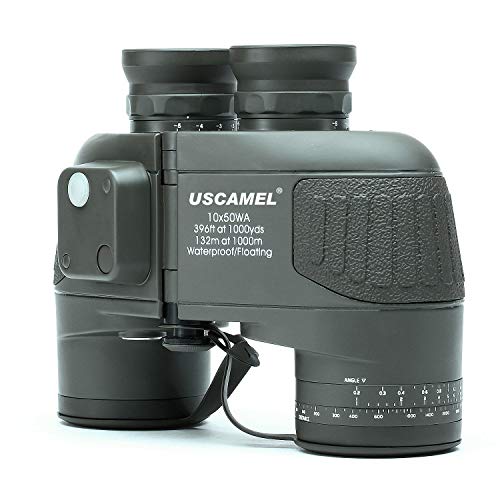
USCAMEL’s marine binoculars offer 10×50 power with a built-in rangefinder compass. The larger 50mm objective helps gather more light in dawn or dusk outings, while the internal compass supports navigation. The FMC coatings and high-quality BAK-4 prisms translate to vivid color and good light transmission, which is valuable when identifying birds, fish schools, or distant landmarks across marina waters. The design emphasizes durability and boat-friendly use, with a focus on field-of-view and distance measurements.
HOOWAY 7×50 Waterproof Marine Binoculars
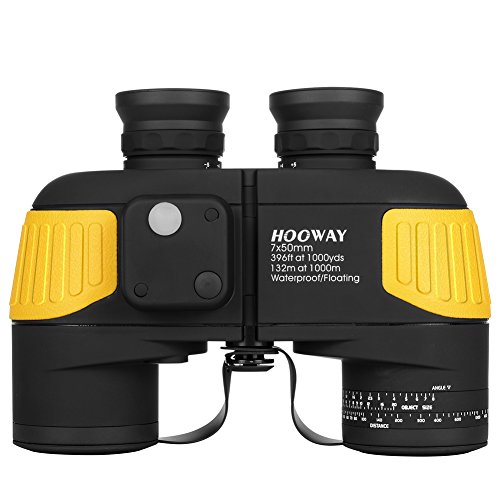
HOOWAY’s 7×50 marine binoculars blend a rugged, water-ready build with rangefinding and compass features. The 7x magnification is well-suited for scanning through spray or sea spray, while the 50mm objective lens helps maintain brightness in low-light conditions. A nitrogen-purged interior supports fog resistance, and the Porro prism design provides a wide field of view for tracking moving targets. This model is intended for navigation, fishing decks, and open-water observation.
Occer 12×25 Compact Binoculars
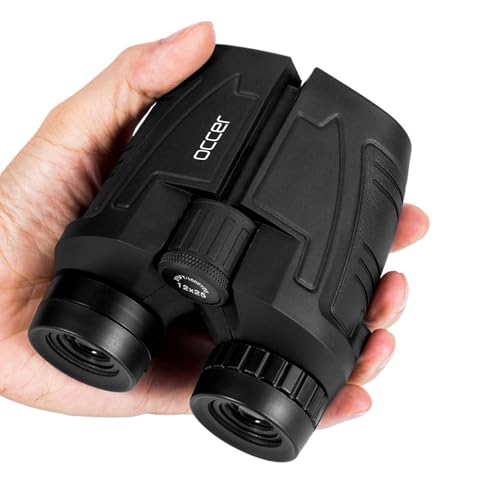
Occer’s 12×25 compact binoculars deliver higher magnification in a portable form. They feature FMC broadband coatings and BAK-4 prisms for clear, bright images and reduced distortion. The smaller size makes them a convenient option for hikers and anglers who want closer views without carrying heavy gear. While offering a tighter field of view than larger models, this pair emphasizes portability and image clarity in a lightweight package, suitable for birds, distant shorelines, or far-off boats.
Buying Guide
Key considerations for selecting fishing or marine binoculars include waterproofing and fogproofing, lens coatings, prism type, and weight. Fully multi-coated lenses maximize light transmission for brighter images in dawn or dusk conditions. BaK-4 prisms generally provide crisper color and contrast than cheaper options. A larger objective lens improves brightness but adds bulk, so balance magnification and portability to suit your typical fishing environment.
- Waterproof and fog-proof design: Look for nitrogen or argon purging and O-ring seals to prevent internal fogging and water intrusion.
- Magnification and field of view: Higher magnification helps see distant activity, but lowers brightness and steadiness. In water environments, 7x to 10x is a practical range; 12x is doable with a stable stance or a tripod.
- Coatings and prisms: FMC or multi-coated lenses with BaK-4 prisms offer better light transmission and color fidelity; green or blue coatings help reduce glare.
- Ergonomics and weight: Heavier models require steadier hands. Consider models with comfortable grips and balanced weight for long use.
- Additional features: Built-in compass and rangefinder can aid navigation, while floating designs help recover buoyant gear if dropped.
In practice, the best choice depends on your typical fishing setting. A waterproof, fully multi-coated 10×42 model works well on boats and at the pier, while a 7×50 floating pair is ideal for open-water use where drops are a risk. If you need precise distance estimations and directional reference, a marine binocular with a built-in compass and rangefinder adds value on longer trips or coastal expeditions. For compact carry, a 12×25 option offers portability with strong magnification for close-in observation on shorelines or docks.
Each option listed prioritizes reliability in marine and fishing contexts, combining weather resistance with optical clarity. When evaluating choices, consider how you typically observe—stand on a deck, cast from a boat rail, or hike to a vantage point. The right binoculars should feel comfortable to hold, stay clear in spray, and deliver sharp, accurate images across varying light levels.
Additional Considerations
- Accessories: Carrying cases, neck straps, and lens caps help protect optics during travel and storage.
- Maintenance: Clean lenses with a microfiber cloth and appropriate solution to avoid scratches. Store in a dry place to prevent mold growth.
- Warranty and service: Look for brands offering solid warranties and responsive customer support for marine gear.
- Budget considerations: Higher-priced models typically offer better coatings and build quality; however, mid-range binoculars often deliver excellent value for fishing needs.