
In this guide
The right boots can transform splitboarding from a chilly challenge into a comfortable, controlled ride across varied terrain. This guide highlights five top boots designed to perform in the backcountry, on icy descents, or during long hillside climbs. Each option balances grip, support, and ease of use, helping riders maintain warmth and stability from first tracks to last run. The table below summarizes the featured products for quick comparison.
| Product | Brand | Key Feature | Type |
|---|---|---|---|
| System APX Snowboard Boots | System | Choice of Traditional Lace or Pro Twist; secure fit | All-Mountain Snowboard Boots |
| Ride Lasso Snowboard Boots | Ride | Medium-Stiff Flex; advanced BOA and J Bars | All-Mountain Snowboard Boots |
| 5th Element ST Lace and Dial Snowboard Boots | 5th Element | ATOP Dial system; versatile lockdown | All-Mountain Snowboard Boots |
| O’Neill Gooru 3 mm Split Toe Boot | O’Neill Wetsuits | Split toe design; ultralight support | Snow/Wet Terrain Boot |
| Men’s Drylock Split Toe Boot 3mm | XCEL | 3D contoured comfort; drylock cuff | Split Toe Boot |
System APX Snowboard Boots Overview

The System APX line offers a choice between traditional lace and the Pro Twist lace system. Traditional lacing provides granular, section-by-section tightening to secure fit across the ankle and forefoot, aided by smoothed metal hooks that resist abrasion for longer boot life. The Pro Twist option emphasizes speed and consistency: a twist dial tightens a reinforced cable through reinforced eyelets for a bomb-proof fit that stays secure all day. Both versions aim to deliver reliable performance from first chair to last run, with a focus on precision and durability.
Ride Lasso Snowboard Boots Overview
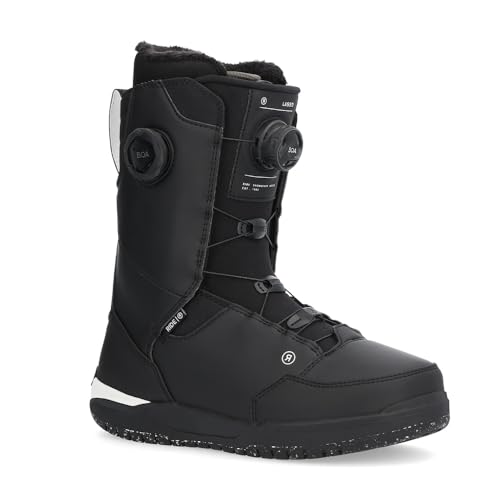
Ride Lasso combines a medium-stiff flex with the H4 BOA Coiler Fit System and Tongue Tied Focus Closure to deliver fast, even closure without bulk. The system provides uniform ankle hold, reducing pressure hotspots, while the Intuition Support Foam liner with J Bars offers enhanced heel and ankle support. Lightweight, responsive, and designed for freestyle to all-mountain riding, the Lasso aims to balance control with comfort for longer sessions on mixed terrain.
5th Element ST Lace and Dial Snowboard Boots Overview

The 5th Element ST integrates ATOP Dial and lace options to tailor fit across the entire foot. The ATOP Dial system enables tightening and support with a simple turn, while the dial release allows for easy exit. This design targets riders who want a customizable fit without sacrificing speed or precision, making it suitable for varying conditions and booter-heavy terrain.
O’Neill Gooru 3 mm Split Toe Boot Overview

O’Neill’s Gooru split-toe boot features a 3 mm TechnoButter 2 construction with a sealed exterior and ultralight support. The split-toe design enhances balance and feel in mixed snow conditions, while the ultralight foxing provides subtle ankle support. Built for comfort and flexibility, this boot caters to riders who emphasize board feel and mobility on split days.
Men’s Drylock Split Toe Boot 3mm Overview

The XCEL Drylock Split Toe Boot emphasizes a 3D contoured comfort profile to minimize bottom rubber for a more authentic board feel. The warmth and comfort come from Celliant Black with Channel Flex, which also aims to retain heat. A drylock cuff helps prevent water intrusion, enhancing performance in damp or slushy conditions and maintaining warmth during long rides.
Buying Guide
Key considerations when choosing splitboarding boots include fit and sizing, boot flex, lacing or dial systems, and how well they pair with bindings and socks. A snug, even fit minimizes pressure points and foot fatigue on long days. Flex varies from forgiving to stiff; choose based on riding style, from progressive park laps to high-speed traverses. Lacing options range from traditional laces to advanced dial systems; dials can offer quick adjustments but may feel less intuitive in cold conditions.
For backcountry or mixed-terrain use, a split-toe design can improve balance and board feel, but it may require more careful sizing. Warmth features, liners, and insulation should align with climate expectations; consider breathable, moisture-wicking liners for longer sessions. Compatibility with bindings is critical—ensure toe boxes, heel cups, and mounting patterns align with your snowboard setup. Durability matters too: reinforced toe and heel caps extend boot life in rugged terrain and frequent hikes to sites.
When comparing options, weigh the balance between ease of entry and lockdown precision. Traditional laces deliver granular control but take longer to secure, while dial systems offer quick closures and consistent pressure. If you ride in variable weather or longer trips, consider a boot with water-resistant materials and a cuff design that resists water entry. For riders prioritizing feel and responsiveness, look for shells designed to minimize rubber contact with the board while maintaining warmth. Always try on with the intended socks and test the fit around the ankle and instep for all-day comfort.