
Best Fluorocarbon Fishing Lines for Clear Water and Serious Strength
Disclosure: As an Amazon Associate I earn from qualifying purchases.
Fluorocarbon line is worth considering when you want a sinking presentation, a clear mainline, or a suitable leader section for a particular fishing setup. Choosing it well means matching the actual spool, strength, diameter, reel, and fishing conditions. A premium sounding name or an “invisible” claim cannot make that decision for you.
The four linked products below are confirmed 100% fluorocarbon options with different strengths and spool lengths. They are not four interchangeable versions of the same purchase. These recommendations use identified product variants and manufacturer information, without invented catch results, knot tests, abrasion rankings, or claims that fish cannot see the line.
Make sure the material is actually fluorocarbon
100% fluorocarbon and fluorocarbon-coated nylon are different materials. A coating does not turn a nylon core into solid fluorocarbon. Read the manufacturer’s material description for the exact product rather than relying on a marketplace category or a shortened listing title. Similarly named products within a brand can use different constructions, so the family name alone is insufficient.
The distinction matters when choosing a line for its handling or sinking characteristics. Do not transfer every property of solid fluorocarbon to a coated line, or assume that an inexpensive hybrid is a direct substitute. A coated option can have a useful role when its actual properties fit the setup. Compare it as a different construction rather than paying for a name that implies it is the same material.
Seaguar’s fluorocarbon FAQ specifically distinguishes coated nylon from 100% fluorocarbon and rejects complete underwater invisibility. It also acknowledges that fluorocarbon stretches. Treat low visibility and handling descriptions as material or product characteristics, not guarantees of more bites, zero stretch, or identical performance at every diameter.
Four spools, four different purchase decisions
Berkley Trilene Big Game Fluorocarbon: 15lb, 350 yards

The linked Berkley is the clear 15lb, 350-yard Big Game Fluorocarbon spool, model BGFL15-15. It is important to distinguish this product from the wider Trilene Big Game family, which also includes other line constructions. The manufacturer’s fluorocarbon page explicitly identifies this version as 100% fluorocarbon.
This variant is a shortlist candidate when a 15lb fluorocarbon mainline fits your rod, reel, presentation, and cover conditions. The 350-yard quantity can be useful for filling a compatible reel and keeping a reserve, but calculate your actual required capacity at the line’s diameter. Do not assume that a reel’s capacity printed for a different material or diameter applies unchanged.
The manufacturer’s manageability and abrasion descriptions establish product positioning, not an independent comparison with the other spools here. Choose it for the verified material, strength, and quantity when those match the planned setup. A stronger label is not automatically better for light lures or a small spinning reel, and “Big Game” does not make this 15lb variant appropriate for every offshore species.
Seaguar Red Label: 12lb, 200 yards

This link identifies the clear 12lb, 200-yard Red Label spool, model 12RM200. Seaguar presents Red Label as a 100% fluorocarbon mainline designed for baitcasting reels, with value and abrasion resistance among its stated priorities. That manufacturer positioning is more useful than describing it as ideal for every type of light tackle.
Consider this variant when a 12lb fluorocarbon mainline suits a compatible baitcasting setup and the amount of line you need. Check the manufacturer’s current diameter information and your reel capacity before comparing it with the 15lb Berkley or 8lb InvizX. Pounds of rated strength and physical diameter are related purchase considerations, but they are not interchangeable measurements.
Do not read a knot-strength claim as a guarantee that an improperly tied or damaged knot will hold. Nor does this product’s value positioning establish that it is inferior to every softer line. If handling on a small spinning reel is the priority, review a product specifically intended for that use instead of forcing this variant into a setup merely because it appears on a shortlist.
Berkley Vanish: 4lb, 110 yards

The linked clear Vanish spool is the 4lb, 110-yard variant, identified as VPS4-15/1053992. Reliable exact-product details list a diameter of approximately 0.17mm. This is the lightest linked strength, and its smaller quantity needs to be checked against the actual reel fill requirement. A product family offering larger strengths does not change what this specific order contains.
Berkley identifies Vanish fluorocarbon as 100% fluorocarbon and positions it around casting flexibility. Some marketplace material fields use generic “blend” wording, but that should not silently override the manufacturer’s specific construction description. Equally, the brand’s claims are not a measured assurance that this spool will cast farther than the alternatives in your hands.
Consider it for light-line freshwater presentations only when 4lb fits the complete tackle and conditions. It is not a general large-fish or heavy-cover choice. If the spool cannot provide the intended fill, do not improvise a capacity assumption at checkout. Compare quantity, any appropriate backing arrangement, and the reel manufacturer’s requirements before committing to the lighter variant.
Seaguar InvizX: 8lb, 200 yards
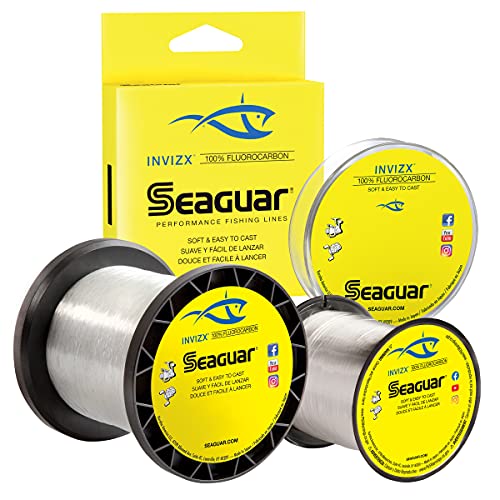
The InvizX link identifies the 8lb, 200-yard spool, model 08VZ200, rather than a different strength available in the same product family. The official InvizX page describes a 100% fluorocarbon mainline developed for soft handling and casting on spinning and baitcasting reels. Its low-memory positioning is relevant to a reader prioritizing manageability.
This 8lb variant is a possible middle ground between the linked 4lb Vanish and the heavier linked spools, but that does not establish a universal “best all-round” strength. Check lure weight, cover, rod rating, reel capacity, and the likely fishing method. A line that is comfortable to handle can still be the wrong choice if the application requires a different strength or physical diameter.
Do not transfer specifications from an adjacent InvizX option in a mixed listing. Some retail descriptions combine family claims or inconsistent strength fields, so match the actual 08VZ200 model and 8lb/200-yard label. Softness does not prove greater sensitivity than every stiffer line, and a low-memory description does not mean that overfilling or line twist becomes impossible.
Plan the line around the presentation
Begin with the lure and water you will fish
Describe the intended presentation before choosing a spool: light casting into open water, repeated contact with cover, a sinking lure, or a leader attached to another mainline. Those jobs impose different demands. Clear water can make low visibility a consideration, but choosing the thinnest available line solely for that reason can overlook abrasion, handling, or the load placed on the tackle.
Think about where the line will contact structure and how you expect to land a fish. A bank with sharp rock edges presents a different problem from open water even when the target species is the same. Choose strength and diameter with the whole situation in mind. A fish’s expected weight is not a simple formula telling you the correct pound-test label.
Fluorocarbon’s sinking character can support some presentations and work against others. If your goal depends on a particular lure remaining near the surface, consider whether a sinking mainline suits that goal. This guide does not prescribe one material for every lure category. The sensible purchase starts with a clear presentation plan, rather than making every fishing method fit the spool already in your cart.
Compare diameter, not just rated strength
Check the actual diameter in millimeters or inches for the selected variant. This helps compare reel capacity, handling, and the size of a connection knot. Avoid treating a reel’s capacity for one named pound-test nylon as an exact capacity for fluorocarbon carrying the same pound number. Use the diameter information and the reel manufacturer’s guidance together.
A thinner line at a particular stated strength may look attractive, but it does not establish stronger knots or better abrasion performance without comparable evidence. Manufacturers may use different formulations and rating methods. Keep the comparison honest: the numbers help narrow a physical setup, while unverified superiority claims should not decide the purchase.
If diameter information is missing from the current offer, ask for the label or manufacturer’s specification rather than borrowing it from another strength. That is especially useful in listings with several selectable sizes. A package that changes from 8lb to 20lb or from 110 to 350 yards is a different variant, even if the photograph and broad family description remain unchanged.
Match the reel’s practical handling requirements
A line can be suitable in material and strength yet awkward on a particular reel. Consult the reel manual for capacity, filling, and operating guidance, then consider the selected line’s diameter and manufacturer’s reel recommendations. Red Label’s baitcasting emphasis and InvizX’s broader spinning/baitcasting positioning offer useful starting points without replacing those specific checks.
For a spinning setup, pay attention to the actual spool size, line management, and filling method. For a baitcaster, use the reel’s appropriate brake and tension setup for the intended lure and line. Do not expect a brand change to correct every casting problem. Diagnose overfilling, inappropriate setup, or repeated slack handling before claiming the line itself is defective.
If you are unfamiliar with a different material or diameter, consider a modest first purchase rather than immediately buying bulk quantities. The linked spool should contain enough for the planned use, but it can still be sensible to evaluate handling on the actual reel before committing to a larger stock. This is a practical ownership choice, not a claim that a short backyard test measures all fishing performance.
Mainline and leader are separate jobs
A mainline spool is designed for filling a reel and repeated casting, while a dedicated leader product can prioritize properties for a shorter terminal section. Do not assume every line sold under the same brand has the same formulation or purpose. The four linked products are mainline-style purchases; none is being described as an interchangeable substitute for every specialized leader application.
Using a section of suitable mainline as a leader can be a practical choice in some setups, but assess the required strength, diameter, knot arrangement, and abrasion conditions. The fact that a spool is clear or made from fluorocarbon does not establish the right leader for sharp structure, teeth, or a demanding saltwater application. Obtain application-specific guidance where that distinction matters.
If connecting fluorocarbon to another material, the joining knot becomes part of the purchasing decision. Consider the relationship between the two diameters and whether the knot must pass through the rod’s guides during casting. A long leader that repeatedly passes through small guides creates different handling requirements from a short terminal section that stays outside them.
Avoid turning a leader recommendation into an exact universal length or strength ratio. Conditions and tackle differ, and a poorly executed connection can dominate the result. Choose a suitable documented knot, practice it with the actual materials, and inspect it before fishing. Carry the information needed to remake that connection correctly rather than relying on a vague memory of a diagram.
Give knot preparation the attention it deserves
Select knot instructions from a reliable source for the actual connection being made. Seaguar’s knot guide is a manufacturer reference for different jobs, rather than evidence that one knot is universally strongest with every spool. Follow the chosen knot’s preparation and tightening directions instead of mixing steps from several methods.
Practice with the intended hook, swivel, or joining materials before a trip. Check that the line seats correctly and that the knot does not appear crossed, damaged, or partly tightened. If repeated practice gives inconsistent results, improve the method or obtain suitable instruction before blaming the brand. The goal is a repeatable connection you can tie properly in ordinary fishing conditions.
Inspect the terminal section after contact with rough cover and after events that could damage it. If you find a nick, flattened section, fraying, or a suspect knot, replace the affected section and retie as appropriate. Abrasion-resistant wording does not mean damage can be ignored. A small amount of line saved is poor value if the working connection is visibly compromised.
Use the rod, reel, and drag as a system rather than treating line strength as permission to pull against anything with maximum force. Follow their operating limits and use appropriate landing practices. Do not wrap tensioned fishing line around your hand or try to lift every fish by the line. A stronger spool does not remove the need to manage hooks and loaded tackle carefully.
Buy enough usable line and keep it identifiable
Before placing an order, check the actual selected spool rather than the range of options shown elsewhere on the page:
- Confirm that the material description says 100% fluorocarbon for this product.
- Match the selected pound-test and diameter to your planned setup.
- Check the stated yardage against the reel’s capacity and your intended use.
- Compare the model number with the linked variant described above.
- Keep the package label so the line remains identifiable after spooling.
Check whether the listed quantity will fill the intended reel at the actual diameter and leave enough reserve for trimming or a replacement terminal section. A 110-yard spool and a 350-yard spool can have very different roles in your tackle bag. Compare cost per usable fill or planned leader supply, rather than price per spool alone.
Retain the package label so you can identify strength, length, model, and material after the line is spooled. This is particularly helpful if several reels carry clear lines that look similar. Label the storage arrangement or reel record in a way that makes the setup understandable before the next trip. Guessing the strength from appearance is not a sound basis for choosing a lure or tightening a drag.
Store unused line cleanly, protect it from physical damage, and follow the product’s care instructions. Do not apply household treatments or heat in an attempt to change its handling unless the manufacturer specifically supports that method. If a spool or its outer layers have been damaged, inspect the usable material before treating the nominal quantity as intact.
Dispose of damaged and discarded line through an appropriate local collection or recycling arrangement. Keep cutoffs out of the water and away from wildlife, and secure them during fishing so wind cannot scatter them. Checking the actual local disposal route is worthwhile because not every collection service accepts every line material. The practical goal is to leave no loose lengths behind.
For a repeat purchase, compare the exact variant with your previous reel record rather than remembering only the brand. Note what you changed between trips, such as lure, diameter, fill level, or connection method. That makes an adjustment more purposeful. Changing several variables at once and attributing the result to the new spool can create an unreliable impression of what actually helped.
Questions that help settle the final choice
Which linked spool is the strongest? The 15lb Berkley has the highest stated pound-test among these four specific variants. That is not a measured ranking of knots, abrasion, or catching performance. Choose the strength that fits the setup, rather than automatically choosing the highest label.
Which is most appropriate for a small spinning reel? Start with its diameter and capacity guidance, the intended lure and conditions, and the line manufacturer’s positioning. The lighter linked variants may be relevant, but no spool here is certified as ideal for every small reel. Confirm the whole combination.
Will fluorocarbon guarantee more fish in clear water? No. Lower visibility is one purchase consideration among presentation, location, conditions, and fish behavior. This guide does not attribute improved catch rates to a product without evidence.
Should I buy a larger spool immediately? Only when the quantity and setup justify it. First confirm the exact material, strength, diameter, and handling requirements. Among these links, choose the spool that supplies the intended job without importing another variant’s specifications or paying for quantity you cannot use.