
Best Hydration Packs for Skiing: Stay Covered on the Slopes
Keep hydrated on winter adventures with purpose-built hydration packs designed for skiing. This guide highlights five top options that blend insulation, accessibility, and secure carry for cold-weather activity. Each pack offers a reliable 2L+ reservoir, smart pockets for essentials, and features that help prevent water from freezing while you shred powder or tackle backcountry terrain.
| Product | Reservoir | Feature Spotlight | Ideal For |
|---|---|---|---|
| Osprey Glade 12 | 2.5L | Insulated harness, diagonal ski carry | Snow lovers and backcountry skiers |
| CamelBak Zoid Snow | 70oz (~2.1L) | Crux reservoir, Therminator Harness | All-day cold-weather runs |
| Blue Quartz Hydration Backpack | 2L | Breathable comfort, insulated bladder | General skiing, day trips |
| Mobihome Hydration Backpack | 2L bladder included | Super lightweight with organized storage | All-mountain skiing and family outings |
| JXFUKAL Running Vest | 2L | 3-in-1 design with quick-access pocket | Active skiers needing quick access |
Note: All featured products are suitable for skiing and related winter activities, offering varying capacities, fit systems, and pockets tailored to cold-weather use. Always verify reservoir compatibility with your ski shell and layering choices before purchase.
Osprey Glade 12 Ski And Snowboard Hydration Pack

The Osprey Glade 12 is built for winter conditions with a 2.5L Hydraulics reservoir and an insulated harness sleeve to prevent freezing. It offers diagonal ski carry and front-panel options for snowboards or snowshoes, enabling quick access to gear in powder or backcountry runs. The all-weather NanoTough fabric resists abrasion and moisture, making it a capable choice for cold, wet, or windy days on the mountain. This pack prioritizes accessibility and durability in challenging winter environments.
CamelBak Zoid Snow Hydration Pack

The CamelBak Zoid Snow uses a 70-ounce Crux reservoir with a Therminator Harness to help keep liquid from freezing in cold conditions. It features a low-profile design optimized for skiing, with lift-access considerations that streamline hydration on chairlifts. The pack’s ergonomic layout supports movement and breathability while wearing gloves, making it a practical choice for extended runs and chilly mornings on the slopes.
Blue Quartz Hydration Backpack

Blue Quartz offers a 2L BPA-free hydration bladder housed in a breathable, lightly padded pack. The shoulder straps use mesh for airflow, and a Y-shaped back panel enhances ventilation. An insulated interior keeps drinks at an optimal temperature, while dedicated pockets on the strap store a phone and small items. The design reduces bounce and improves overall stability during dynamic ski movements, making it a strong option for day trips or lift-assisted skiing.
Mobihome Hydration Backpack

Mobihome emphasizes ultra-lightweight design and practical organization. The pack weighs around 395g and includes a BPA-free 2L bladder with a push-lock bite valve for leak-proof sipping. It adds front zipper pockets for essentials and a separate layer to keep the water bladder dry. Adjustable shoulder and waist straps help minimize bounce, which is important when carving turns or traversing icy terrain on skis.
JXFUKAL Running Vest Hydration Pack
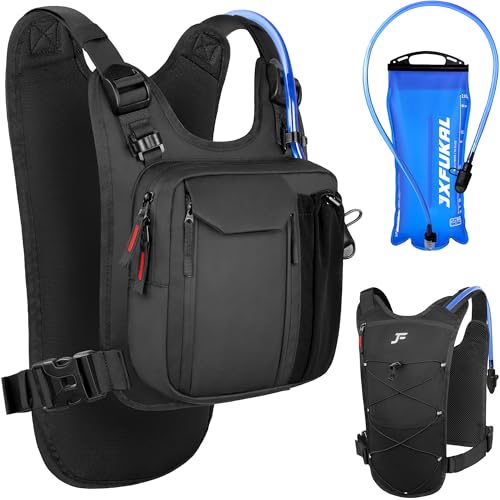
The JXFUKAL hydration vest combines a 2L bladder with a running vest and chest bag. This 3-in-1 design offers a front pocket system to hold a phone, gels, or keys, and a rear compartment for the water bladder. A dedicated, touch-sensitive pocket enables phone use without removing the device, which can be advantageous for navigational apps on the lift line or mid-run safety checks. The vest is tailored for performance in running, cycling, skiing, and other vigorous activities in cooler weather.
Buying Guide
- Hydration capacity: For skiing, 2L or more is common; consider 2.0–2.5L to balance weight and hydration duration, especially for backcountry days.
- Insulation and temperature management: Look for insulated sleeves, reflective surfaces, or insulated reservoirs to reduce freezing of the drinking tube and liquid in cold conditions.
- Back panel and shoulder comfort: Breathable mesh and padded straps reduce sweating and chafing under multiple layers. A snug, bounce-free fit improves handling on lifts and during turns.
- Storage and accessibility: Pockets sized for phones, maps, snacks, and safety gear (gloves, small repair tools) help keep essentials reachable without removing gloves.
- Carrying options: Ski-specific packs often include diagonal ski carry or front-panel attachment. If you frequently ski backcountry or powder, prioritize ease of access and stability when the pack is loaded.
- Durability and weather resistance: Winter conditions demand tough fabrics; consider water resistance, abrasion resistance, and reinforced seams for longevity on rough slopes.
- Compatibility with layers: Ensure the pack fits over jackets and mid-layers and comes with adjustable straps to prevent overheating or crowding around the chest.
When choosing among these packs, evaluate the exact terrain you ride, climate, and the frequency of backcountry trips. For lift-served days, lighter, more breathable designs with quick-access pockets may be ideal. For backcountry expeditions, higher capacity, diagonal carry options, and corrosion-resistant components add value. Always verify warranty terms and reservoir compatibility with your preferred hydration system to ensure dependable performance on the mountain.