
In this guide
Finding the right insoles cantransform trail runs by aligning your foot, stabilizing your gait, and reducing fatigue on uneven terrain. This guide highlights five highly-rated trail-friendly insoles designed to support arches, cushion impact, and promote steady momentum across trails, tracks, and rugged paths. Each option balances stability with flexibility, helping runners of different arches stay comfortable longer. Below is a quick overview of the selected products to help you compare options at a glance.
| Product | Brand | Key Benefit | Arch Type |
|---|---|---|---|
| CurrEx RunPro Insoles | Currex | Dynamic arch support and rebound cushioning | Low–Medium |
| Superfeet Run Cushion | Superfeet | High arch support with adaptive comfort | High |
| SOPROM Running Insoles | SOPROM | Trim-to-fit, deep heel cup, flexible movement | Low–Medium–High |
| FEELLIFE Plantar Fasciitis Relief | FEELLIFE | Heel cradle and TPU/gel shock absorption | Medium |
| CRUVHEAL Sport Insoles | CRUVHEAL | Gel pads, balanced shock absorption | Neutral to Medium |
CurrEx RunPro Insoles for Running Shoes
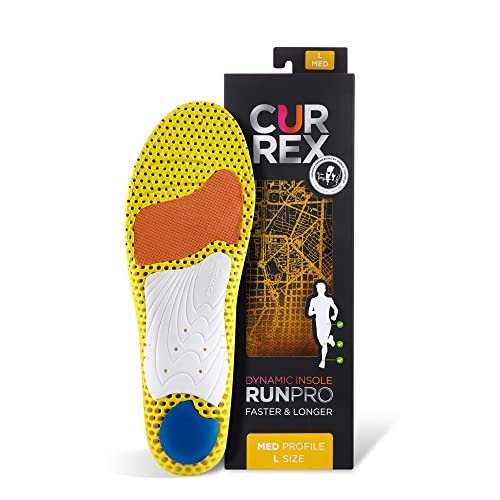
CURREX RunPro insoles are designed to provide flexible support from heel to toe, aiming to reduce fatigue and help prevent common running injuries. The 3D Dynamic Arch Technology offers multiple arch profiles, including a medium option, and a deep decoupled heel cup locks the heel for stability. They promote faster regeneration and more powerful propulsion with each stride, while a zero heel drop helps improve fit across a variety of trail footwear. The insoles are trimable for a precise fit, which can be beneficial when adjusting for different trail shoes.
These insoles emphasize dynamic energy return, with rebound cushioning that supports trail days without adding excessive bulk. The combination of flexible movement at the flex point and a stable heel cup makes them well-suited for mixed terrains where stability and energy efficiency matter, such as rocky fire roads and rooty singletrack. Trails benefit from a balance of comfort, control, and propulsion, especially during longer outings.
Superfeet Run Cushion High Arch Insoles

Superfeet Run Cushion insoles provide high-arch support with patented Adaptive Comfort Technology that flexes with the foot for efficient heel-to-toe turnover. They are trimmed to fit user shoes and offer durable arch support designed to complement long runs and varied terrain. The high arch profile is intended to stabilize the foot during dynamic movements on uneven trails, aiding balance and reducing fatigue over rugged terrain. The insoles are designed to work well in both running and walking footwear and in zero-drop shoes.
For trail runners with pronounced arches, the enhanced arch support can reduce overpronation and help manage foot fatigue during extended climbs or downhill sections. The durable construction aims to maintain support through mixed weather and multi-surface conditions, making them a solid choice for those who frequently switch between trail surfaces and road transitions.
Running Shoes Insoles With Low/Medium/High Arch Support

This SOPROM insole line offers trim-to-fit flexibility across low, medium, and high arch configurations. The deep heel cup stabilizes the foot, and the forefoot and heel articulations allow flexible movement suited for trail shoes. The high-rebound pads provide energy return, helping maintain propulsion on ascents and transitions. The design focuses on even weight distribution to reduce peak pressures on sensitive points, which can be beneficial during longer runs on uneven surfaces.
Runners dealing with arch-related discomfort can adjust to match individual arch height and shoe type, enabling a customizable fit. The combination of grip-enhancing material and foldable sections supports a secure in-shoe feel during technical terrain, reducing micro-movements that can lead to blisters or hotspots on long trail outings.
Supercritical Foaming Arch Support Insoles

These insoles feature supercritical foaming technology to boost rebound and cushioning while maintaining a slim profile ideal for trail shoes. The ergonomic “Golden Triangle” stability design combines forefoot, arch, and heel support with a U-shaped heel cup to enhance balance and reduce sprains. The materials mix aims to provide sustained comfort through walking, running, or standing on varied terrains, reducing fatigue on longer trail days.
The combination of lightweight foam, nylon support, and Poron elements works to attenuate impact across different terrains and weather conditions. While slim, the inserts aim to deliver consistent support, especially when scrambling over roots or negotiating rocky sections.
Buying Guide
Key considerations when choosing insoles for trail running include arch type, stability, cushioning balance, and fit. A few perspectives to weigh:
- Arch support level: High arches benefit from firmer, structured support; low-to-medium arches may prioritize flexible stability with a moderate arch height.
- Heel stability: A deep heel cup can reduce heel slippage and improve tracking on uneven trails, decreasing the risk of blisters and missteps.
- Cushioning vs. response: Trail running often requires a balance between impact absorption and energy return. Look for insoles with targeted gel or foam zones under the heel and forefoot for efficient momentum on ascents and descents.
- Trim-to-fit capability: Shoes vary in shape and size; trim-to-fit options help tailor footprint alignment and prevent crowding inside the shoe.
- Breathability and odor control: Perforated designs and moisture-wicking materials help keep feet dry and reduce odor during long trails.
- Durability and weight: Trail insoles should resist breakdown under rugged use while remaining light enough not to hinder performance.
Consider testing a couple of options that align with your arch height and typical trail conditions. For runners who encounter plantar fasciitis or specific foot fatigue, look for insoles with a pronounced heel cradle and dedicated shock-absorbing zones. If you frequently switch footwear, trim-to-fit models provide a practical way to maintain consistent support across different shoe silhouettes.