
In this guide
- Hesacore: Carbon Grip Paddle
- DGYGQ: Extended Handle Carbon Paddle
- JOOLA Essentials Performance Paddle
- DGYGQ: Carbon Fiber With 13mm Core
- MTEN: USAPA-Approved Paddle Set
- Buying Guide: Key Purchase Considerations For Tendonitis
- Additional Considerations And Perspectives
- Comparative Snapshot
- Buying Guide Recap: Quick Reference
People dealing with tendonitis want paddles that reduce vibration, improve grip, and minimize finger and wrist strain. This guide highlights five paddles that prioritize comfort without sacrificing performance. Each option offers features designed to ease pain, protect joints, and maintain reliable play across a range of skill levels.
| Product | Brand | Key Benefit |
|---|---|---|
| Hesacore Pickleball Paddle Carbon Grip | Hesacore | Enhanced grip with anti-vibration design |
| YVmove Pickleball Paddle | YVMOVE | Stiff, durable carbon with strong spin control |
| JOOLA Essentials Performance Paddle | JOOLA | Reinforced fiberglass and honeycomb core |
| DGYGQ Pickleball Paddles | DGYGQ | Extended handle for two-handed power |
| MTEN Pickleball Paddles Set | MTEN | Set includes two paddles, great for practice |
Note: The following sections summarize five selected paddles with features that may help players managing tendonitis, such as grip comfort, vibration reduction, and ergonomic handling. Each product section includes a concise overview, notable specifications, and practical considerations for choosing the right paddle.
Hesacore: Carbon Grip Paddle

The Hesacore paddle prioritizes grip comfort and reduced finger contraction. Its multifaceted handle design expands contact area, supporting a strong, stable grip with less effort. Reports indicate improved grip strength and reduced slippage, which can help lessen strain during longer rallies. The hexagonal grip structure aligns with finger joints for better control, while the design aims to minimize torque and vibration without compromising control. This paddle is suitable for players seeking a more relaxed grip and steadier contact on off-center shots.
DGYGQ: Extended Handle Carbon Paddle

With a precision carbon fiber construction and an extended handle, this paddle supports stronger two-handed backhands and greater leverage. The extended handle can help distribute stress more evenly across the forearm and wrist, potentially reducing strain on tendons during powerful swings. The lightweight build enhances maneuverability, while the carbon frame and core balance power with control. This option is well-suited for players who value stability and reach, especially when playing longer sessions.
JOOLA Essentials Performance Paddle

This paddle emphasizes a forgiving feel and durable construction. It uses reinforced fiberglass layers and a polypropylene honeycomb core to balance power and control while helping manage vibration transmission. The generous sweet spot supports consistent contact, which can reduce the need for forceful swings that aggravate tendonitis. It’s positioned as an approachable option for players progressing toward more competitive play without adding joint strain.
DGYGQ: Carbon Fiber With 13mm Core
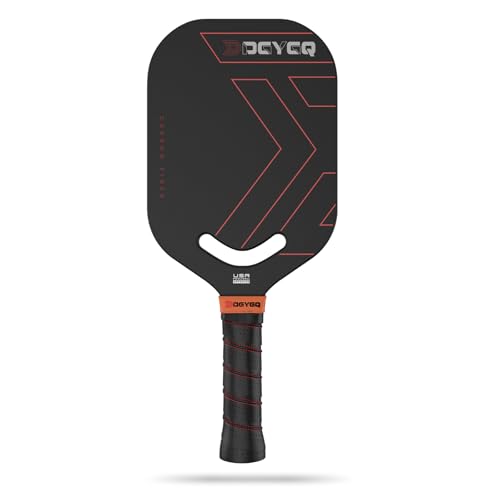
This paddle blends carbon fiber with a 13mm polypropylene honeycomb core to maximize power and spin while maintaining stability. The combination of carbon fiber stiffness and core design offers a responsive feel with potential vibration dampening benefits. An extended handle feature supports two-handed play, aiding weight distribution and reducing peak wrist flexion forces. It is a solid pick for players seeking high performance with a focus on ergonomic handling.
MTEN: USAPA-Approved Paddle Set

The MTEN paddle set focuses on beginner-friendly ergonomics and balanced performance. It includes two paddles with a comfortable perforated grip designed to wick sweat and reduce slippage. The fiberglass surface and polypropylene core provide a stable response with lower vibration, making it a practical option for players who want a cost-effective pair that still supports joint comfort during longer sessions. The set is well-suited for families or players who practice together.
Buying Guide: Key Purchase Considerations For Tendonitis
- Grip design and size: Look for grips that minimize finger compression and provide a secure, comfortable hold. Ergonomic or larger-grip options can reduce wrist and finger strain during play.
- Vibration dampening: Paddles that dampen vibrations help limit tendon stress. Materials like honeycomb cores and vibration-reducing handle geometries can contribute to a smoother feel.
- Weight and balance: Lighter paddles reduce cumulative stress on the elbow and forearm. Balance toward the handle can improve control with less leverage required for shots.
- Handle length and design: An extended handle supports two-handed backhands, distributing force more evenly and potentially reducing tendon load on the dominant wrist.
- Grip texture and sweat management: Perforated or moisture-wicking grips improve security without requiring a tighter hold, which can aggravate tendonitis.
- Materials and construction: Carbon fiber paddles offer stiffness and power, while fiberglass paddles tend to provide a more forgiving feel. Consider a core with a good balance of power and dampening.
- USAPA approval and rim design: For tournament readiness, ensure paddles meet USAPA guidelines and feature a forgiving face for steadier contact.
Additional Considerations And Perspectives
When selecting a paddle for tendonitis, it helps to think about your typical playing style, session length, and how prone you are to wrist and forearm strain. Players who rely on quick, light touches may benefit from a paddle with excellent control and a softer feel, whereas those who generate power with a two-handed backhand might prefer an extended-handle design to reduce peak wrist torque. If possible, try a few paddles in a short trial period to assess grip comfort, vibration, and overall comfort before making a longer commitment.
Comparative Snapshot
The Hesacore paddle stands out for grip-focused design and potential elbow relief. The YVmove paddle emphasizes structural strength and spin control, while JOOLA Essentials concentrates on forgiveness and core dampening. DGYGQ’s extended-handle models optimize leverage and stability, and MTEN’s set offers approachable value with ergonomic grips. Your best choice hinges on grip comfort, vibration management, and handle design that aligns with your playing style and tendonitis management needs.
Buying Guide Recap: Quick Reference
- Prioritize grip comfort and size to minimize finger contraction.
- Choose vibration-dampening construction to protect tendons.
- Consider weight and balance to reduce wrist load over long sessions.
- Evaluate handle length for optimal leverage and stability.
- Check for USAPA approval if you plan to compete in sanctioned events.