Best 125 Grain Single Bevel Broadheads for Penetration and Precision
Answering hunters’ need for deep penetration and reliable field flight, this guide compares top 125 grain single bevel broadheads. Best for tracking and ethical harvests, these designs favor serious penetration, bone splitting capability, and predictable flight from various bow setups. The highlighted picks cater to big-game hunters, turkey and deer stalkers, and bowhunters who value deep wound channels and cut-on-contact efficiency. Below is a quick summary table of the selected products and their ideal use cases.
| Product | Best For | |
|---|---|---|
| Magnus SB125 Single Bevel 2 Blade Broadhead | Heavy bone targets, deep penetration | Solid field-flight and deep wound channels |
| Magnus Single Bevel Buzzcut 2 Blade Broadhead | Bone-in big game, aggressive penetration | Serrated blade adds cutting edge through tough tissue |
| New Archery Products Deep Cuts Single Bevel 125 Grain | Deep penetration and flight stability | All stainless, main blade curved for depth |
| 6PK Hunting Broadheads 125 Grain Fixed Blades | All-around big-game penetration | Right bevel, thicker blades for strength |
| Annihilator Single Bevel 3-Blade Broadhead | Balanced 3-blade penetration | Single bevel design for deep cut channels |
Magnus SB125 Single Bevel 2 Blade Broadhead

The Magnus SB125 uses a single bevel design that twists on entry to enhance deep penetration and create large wound channels. The main blade is a robust .047 inch edge, designed for edge retention and dependable cut-on-contact performance. This broadhead is built to fly true from modern compound bows, crossbows, recurves, and longbows. Best for hunters who prioritize maximum penetration and spinal or bone-splitting capability in big-game hunts.
Best for: Hunters seeking sharp deep-penetration performance and predictable field flight from various bow setups.
Why selected: The combination of a razor-sharp single bevel edge and a stout .047″ blade supports strong penetration and clean blood trails. The design emphasizes precision and reliability in deep-range shots.
Caution: Fixed-blade broadheads require precise tuning and consistent practice to ensure broadhead alignment with the arrow’s flight path.
Magnus Single Bevel Buzzcut 2 Blade Broadhead
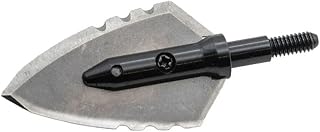
The Buzzcut model combines a serrated, single bevel edge with a cutting blade that rotates through impact. The serrated blade is designed to remain sharp while aiding tissue disruption and bone cutting. Like other single bevel designs, it aims to maximize penetration while maintaining reliable field-flight. It is ideal for hunters who want extra cutting power at the point of impact and a robust wound channel.
Best for: Big-game hunters who encounter heavier bone and want sustained blade performance through tissue.
Why selected: The serrated blade adds cutting surface and helps maintain momentum through dense tissue, which can improve blood trail formation.
Caution: The serrated edge may require more frequent inspection for wear after heavy bone contact.
New Archery Products NAP Deep Cuts 125 Grain

New Archery Products Deep Cuts broadhead features a single bevel blade design and all-hardened stainless construction. The main blade is curved to promote deeper penetration and potentially improved flight stability. This model suits hunters who value durable stainless steel and a design that prioritizes deeper wound channels and reliable performance across various archery setups.
Best for: Hunters who want a robust stainless steel build and a blade geometry designed for deeper penetration.
Why selected: The curved main blade and all-stainless construction aim to balance penetration depth with dependable field-point-like flight.
Caution: Stainless steel may be less forgiving on site maintenance compared with carbon steels if not cleaned and sharpened promptly.
6PK Hunting Broadheads 125 Grain Fixed Blades

This 6-pack offers fixed-blade, right-bevel broadheads designed for robust penetration with thicker blades for strength. Each head weighs 125 grains and is designed to fit a wide range of traditional and modern compound bows. The right bevel orientation encourages stable flight from properly tuned rigs and strong impact to maximize terminal performance.
Best for: Archers who want bulk value and a straightforward, reliable single-bevel design for big-game targets.
Why selected: The thicker, more robust blade construction can contribute to maintaining sharpness and cutting capacity through dense tissue and bone.
Caution: A 6-pack may include heads with varying tolerances; ensure consistency and inspect any batch for sharpness before hunting.
Annihilator Single Bevel 3-Blade Broadhead
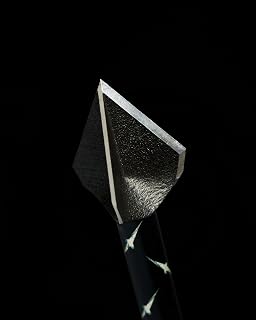
The Annihilator broadhead follows a single bevel concept with a tri-blade configuration. This design aims to combine deep penetration with broad-cutting power to create significant wound channels. It is positioned for hunters who want the efficiency of a single bevel plus the added cutting width of three blades.
Best for: Hunters who prefer a three-blade arrangement with the penetration benefits of a single bevel edge.
Why selected: The three-blade setup can offer broader tissue disruption while maintaining the single bevel penetration advantages.
Caution: Three blades can increase drag; ensure your bow setup is tuned for consistent flight with three-blade heads.
Buying Guide
What is a single bevel broadhead and why choose 125 grains?
A single bevel broadhead uses an angled cutting edge on one side, which can enhance penetration by creating a directional torque through tissue and bone. A 125-grain weight is a common standard that balances momentum and flight stability for many hunting setups, making it a versatile choice for large game.
Which features matter most for reliability?
- Blade geometry: Single bevel versus serrated edges impacts penetration and wound channels.
- Blade thickness: Thicker blades offer strength but can affect flight; ensure your bow is tuned.
- Material: Stainless steel is durable; carbon steel blades may take sharper edges; stainless resists corrosion.
- Flight consistency: Field-tip-like flight reduces drop in accuracy at typical hunting distances.
What should I consider about blade count?
Two-blade designs emphasize penetration and strength; three-blade configurations can offer broader cutting surfaces but may require more precise tuning and broader target impact. Consider your target species and preferred shot distance when choosing blade count.
How important is sharpening and maintenance?
All fixed-blade broadheads require regular inspection for sharpness and alignment. Serrated edges may hold cutting power longer but can demand more maintenance after heavy use.
What about compatibility with different bows?
Look for a model described as field-tip accurate across compounds, recurves, longbows, and crossbows. The best options maintain stable flight regardless of bow type, increasing reliability in hunting situations.
How to choose among the five products listed here?
For deep-penetration priority, select Magnus SB125 or Deep Cuts. If you want serrated advantage for tough tissue, consider Buzzcut. For value or multiple heads, the 6-pack provides convenience, while Annihilator adds a three-blade balance.
Summary comparison
- Best for bone-in penetration: Magnus SB125, Buzzcut
- Best mass selection: 6PK Hunting Broadheads
- Best stainless durability: New Archery Products Deep Cuts
- Best broad-cut balance: Annihilator
FAQ
- What is the advantage of a single bevel edge? Answer: It can create a directional cut that improves penetration and wound channel size.
- Do 125-grain broadheads fly like field points? Answer: Many are designed to, but tuning and arrow setup are essential.
- Are serrated blades better for hunting? Answer: Serrated blades can help cut through tougher tissue, but may require more maintenance.
- Should I use fixed-blade broadheads for all game? Answer: Fixed blades are reliable for penetration and consistency across ranges; tune your setup for best results.
- How do I choose a head for crossbow use? Answer: Look for field-tip accuracy and a design tested for crossbow trajectories plus compatibility with your bolts.
- Is maintenance important? Answer: Yes; inspect sharpness, edge alignment, and ferrule integrity before each hunt.