Best 3 Blade Single Bevel Broadhead Choices for Precision Bowhunting
The best 3 blade single bevel broadheads deliver deeper penetration, cleaner wound channels, and more predictable flight from a variety of bows. This guide highlights five top options for big-game hunting, focusing on who each product is best for, and why they’re chosen. Whether you’re chasing elk, deer, or moose, these selections prioritize clean kills and ethical harvests. The table below summarizes the featured products and their ideal uses.
| Product | Best For | Grain / Size | Key Benefit |
|---|---|---|---|
| Magnus Single Bevel 2 Blade Broadhead, 150 Grain | Big-game hunters seeking deep penetration | 150 grain | Razor-sharp single bevel for bone splitting and large wound channels |
| Swhacker #311 100 Grain Fixed 3-Blade | Precision flight and deep penetration | 100 grain | Three blades with compact design for true flight |
| Annihilator Single Bevel 3-Blade Fixed Broadhead | High-energy penetration and rotational cutting | 3 blades | Single bevel for spiraled wound channels |
| Magnus SB125 Single Bevel 2 Blade Broadhead, 125 Grain | Balanced performance for mid-weight arrows | 125 grain | Cut-on-contact design with reliable penetration |
| Annihilator Single Bevel 3-Blade Broadheads, 3-Pack | Consistent, rotational wound geometry | 3 blades | Sharp single bevel edge with three-blade design |
Magnus Single Bevel 2 Blade Broadhead, 150 Grain

Features include a single bevel edge designed to twist and cut deeply upon entry, increasing penetration through dense tissue and bone. The main .059-inch blade provides edge retention and robust cut-on-contact performance, while the design aims to maximize wound channels for faster blood trails. Best for hunters who value deep penetration and reliable field performance from a fixed-blade setup.
Best for: Big-game hunters needing maximum penetration from heavy bone. Limitations: Slightly heavier grain may demand higher draw weight or longer-range applications.
Swhacker #311 100 Grain Fixed 3-Blade Broadhead

This three-blade fixed broadhead uses a compact 1.2-inch cutting diameter and three .031″ blades. Its single-bevel design concentrates energy at the edge, helping to split bone and drive the arrow deeper into vitals. The anodized aluminum ferrule and short profile reduce planing for better flight at extended ranges. Best for: Archers who want deep penetration with a lighter overall setup and tight, stable flight. Caution: 100-grain heads may require tuning with lighter arrows for optimum flight from certain bows.
Annihilator Single Bevel 3-Blade Fixed Broadheads, 3-Pack
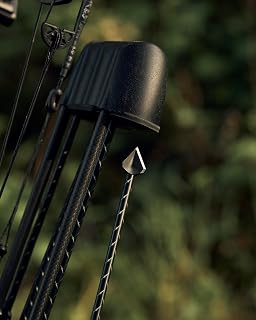
Equipped with three blades and a single bevel edge, this broadhead is designed to rotate on impact, forming a spiral wound channel for deep penetration and increased internal damage. The three-blade geometry contributes to a wider wound profile at impact while maintaining strong penetration characteristics. Best for: Hunters seeking aggressive, rotational cutting without sacrificing flight stability. Limitation: The three-blade setup can be a touch more sensitive to broadhead alignment in some arrow configurations.
Magnus SB125 Single Bevel 2 Blade Broadhead, 125 Grain

125-grain variant with a cut-on-contact design supports reliable penetration and accurate flight from standard hunting setups. The single bevel edge aids in rotational cutting and energy transfer on impact. Best for: Archers who want a mid-weight option with proven penetration potential. Caution: Some setups may require tuning to ensure optimal flight with heavier arrows.
Annihilator Single Bevel 3-Blade Broadheads, 3-Pack
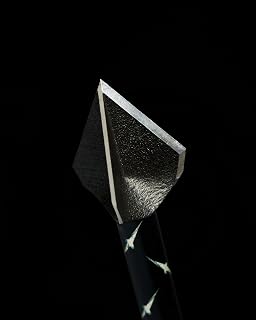
Another 3-blade option emphasizing single bevel rotation for deep penetration and heavy blood loss. The combination of a sharp single bevel edge and a triangular blade layout aims to maximize wound volume and energy transfer. Best for: Hunters prioritizing a balance of penetration and wound geometry. Limitation: Availability may vary and could require stock checking before planning hunts.
Buying Guide: What To Consider When Choosing a 3-Blade Single Bevel Broadhead
- Grain and weight: Higher grain can provide deeper penetration but may require stronger bows or slower draw cycles. Choose grain that matches your bow’s performance and arrow setup.
- Bevel design: Single bevel angles twist and rotate on impact to improve energy transfer and bone-cutting capability. This is a core advantage for deep penetration but may demand precise tuning for flight consistency.
- Blade geometry: Three-blade designs increase wound channels but add mass at the tip. They can improve blood trails but require careful broadhead alignment for consistent flight.
- Flight compatibility: Ensure your arrow/fletching configuration and bow type (compound, crossbow, recurve, or longbow) deliver stable flight with the selected broadhead.
- Durability and tip construction: Look for hardened tips and robust ferrules to withstand impact and maintain edge integrity in tough hunting scenarios.
- Ethical considerations: Deeper penetration and clean wound channels contribute to quicker, humane outcomes. Consider your hunting environment and game size when selecting a broadhead.
FAQ
- What is a single bevel broadhead? It has a beveled edge on one side that causes the blade to rotate on impact for deeper penetration and a spiral wound wound channel.
- Do three-blade designs penetrate as well as two-blade designs? They can offer broader wound channels and more tissue damage, but penetration largely depends on tip design and blade geometry.
- Is a higher grain better for hunting? Higher grain broadheads can increase momentum and penetration but may require a stiffer bow setup and proper tuning for accurate flight.
- Can single bevel broadheads be used with any bow? They are compatible with most bows, but flight and accuracy depend on alignment with arrows and fletching, so tuning is essential.
- Which broadhead is best for bone penetration? Bevel designs and larger cutting diameters tend to perform better with dense bone, but flight stability should always be validated with tuning.
- How many broadheads should I stock? Having multiple options (e.g., 2–3 head types) is common to match varying hunting conditions and game species.