
Best Golf GPS Laser Rangefinders for Precise Yardages on the Course
When selecting a golf rangefinder, aim for devices that combine laser accuracy with GPS data, easy readability, and tournament legality. This guide highlights top options across price and features, helping different buyers: casual players seeking straightforward yardages, club-fitters needing GPS and pin-lock, and tech enthusiasts wanting advanced displays and course data. The table below compares five strong choices to kickstart your decision.
| Product | Key Strength | Best For |
|---|---|---|
| REDTIGER Golf Rangefinder | Slope switch, 1200-yard range, USB-C | All-around performance with slope-enabled play |
| Bushnell Golf Tour Hybrid | Hybrid laser + GPS, Pinseeker with JOLT | Players who want both laser and GPS in one device |
| Callaway 300 Pro | Precise slope, Pin Acquisition Technology | Tournament-legal play with solid magnification |
| Blue Tees Captain Pro | GPS + laser, club recommendations, 1200 yards | Course management with on-screen guidance |
| Garmin Approach Z82 | 2-D course overlays, high accuracy | Premium mapping and rangefinding workflow |
REDTIGER Golf Rangefinder with Slope Switch

The REDTIGER model offers slope switching, a 1200-yard maximum range, and 7x magnification. It includes a magnetic mount and USB-C charging for easy power top-ups. This device is a class 1 laser product, suitable for casual rounds and practice days. It is best for players who want a versatile setup with quick, readable yardages in a compact form factor.
- Best for players who value a high range limit and slope-enabled distances for practice and competition contexts where slope is allowed.
- Includes six measurement modes, including slope compensation and flag locking, to adapt to various course layouts.
Best for: mid-to-advanced players who want a robust, all-purpose rangefinder with modern charging and a reliable display. Caution: in some competitions, slope data must be disabled; ensure you toggle off slope when required.
Bushnell Golf Tour Hybrid Laser Rangefinder

The Bushnell Tour Hybrid blends laser and GPS data in one device. Its Pinseeker with Visual JOLT confirms lock and provides tactile feedback with a red LED indicator. The Slope-Switch lets players toggle slope for tournament compliance, ensuring reads are useful for both practice and rounds. This choice is ideal for players who value both laser accuracy and quick GPS yardages from the same device.
- Best for players who want simultaneous laser and GPS distances with easy pin lock.
- Limitation: heavier feature-set may require a brief learning curve to access all modes.
Best for: golfers who want a single tool that covers course distances, front/center/back readings, and slope-adjusted distances. Choose this if you often consult GPS data mid-round.
Callaway Golf 300 Pro Slope Laser Rangefinder

The Callaway 300 Pro emphasizes precise slope measurement, 6x magnification, and a 5-1000 yard range with ±1 yard accuracy. It features an external Slope On/Off switch, legal for tournament play when the slope is disabled, and Pin Acquisition Technology for pin-lock within 300 yards. This model suits players who want dependable accuracy and a straightforward interface.
- Best for tournament players who need a reliable on/off slope option and precise pin locking.
- Limitation: maximum distance is slightly below some competitors at long-range shots.
Best for: golfers who prioritize legal play with clear distance reads and a proven pin-lock experience. Avoid if you need GPS-only distances in the same unit.
Blue Tees Captain Pro Golf Rangefinder
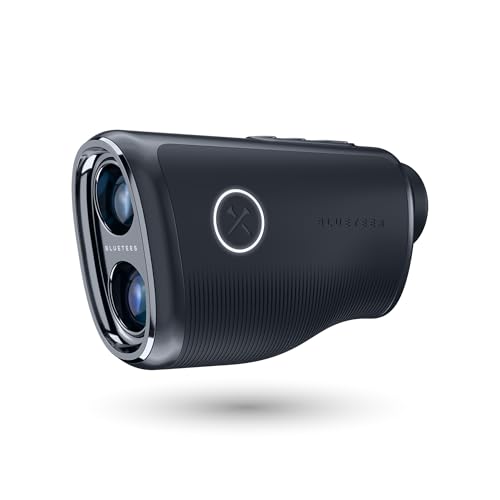
The Captain Pro combines GPS distances with a laser rangefinder and offers built-in club recommendations in the display. It supports a 1200-yard range and features a magnetic cart mount for easy placement on the cart. The device is positioned for golfers who want course awareness alongside practical club guidance.
- Best for players who want integrated GPS front/center/back distances with laser readings.
- Limitation: some users may prefer a lighter headset for handheld use during quick play.
Best for: golfers who want a guided, data-rich view on the screen to support club selection and shot planning. Choose this if you value on-screen recommendations as part of decision-making.
Garmin Approach Z82
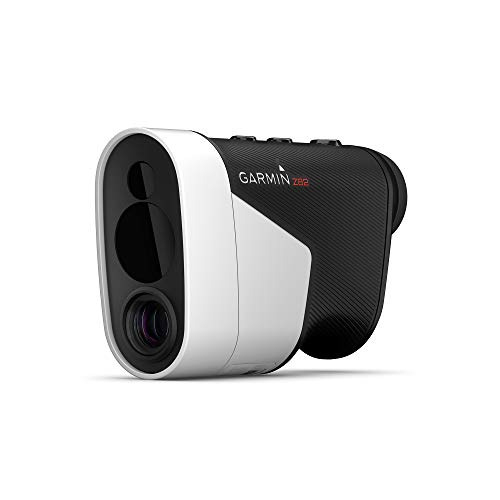
The Garmin Approach Z82 is praised for accuracy within 10 inches of the flag and up to 450 yards, with full-color 2-D CourseView mapping for more than 41,000 courses. It delivers vibrational feedback when locked and provides robust course overlays. This option suits serious course readers who want precise readings and detailed course visuals to guide strategy.
- Best for players seeking premium course mapping and precise lock feedback.
- Limitation: slightly shorter range compared to some laser-focused models.
Best for: golfers who prioritize precise pin reading, course overlays, and a highly visual course experience. Avoid if you need longer laser-only range outside of GPS overlays.
Buying Guide
What to look for when choosing a golf rangefinder
- Range and accuracy: Look for devices offering at least 1000 yards with sub-two-yard accuracy for green reads.
- Slope and legality: If you play in tournaments, ensure the device allows slope on/off for legal rounds.
- GPS vs. laser balance: Decide whether you want a pure laser rangefinder, GPS-enabled, or a hybrid that combines both.
- Display readability: A clear LCD or OLED readout is essential in bright sun; consider magnification and screen brightness.
- Weight and form factor: Lighter handheld units are easier to use on the course; magnetic mounts can enhance convenience on carts.
- Battery life and charging: USB-C charging is common; check battery life for full rounds and ease of replacement.
- Course data and updates: Some devices offer preloaded course data and easy updates for new courses.
How to compare models quickly
- Compare range, slope options, and lock accuracy side-by-side.
- Consider whether you need GPS distances in addition to laser readings.
- Evaluate readability under sun exposure and how easily you can toggle modes mid-round.
- Check for any tournament-legal requirements if you plan to compete.
FAQ
- What is the difference between a slope-enabled and a slope-disabled mode? Answer: Slope-enabled mode adjusts distances to account for incline/decline, while slope-disabled mode provides straight-line distances suitable for tournament play when required to disable slope data.
- Do laser rangefinders show GPS data? Answer: Some models combine GPS with laser data, offering front/center/back distances in addition to laser readings.
- Is a magnet on a rangefinder useful? Answer: A magnet can help mount the device to a cart or metal surface, but not all models include magnets or magnetic mounts.
- How important is magnification? Answer: Higher magnification helps lock onto distant pins but can add size and weight; 6x is common and effective for most greens.
- Can a rangefinder be used for practice on non-course surfaces? Answer: Most models target golf course distances; using them off-course may yield imprecise results due to different terrains.
- What should I consider if I frequently play on courses with new layouts? Answer: Look for models with easy course updates or the ability to add new courses remotely via updates.