
Best Pontoon Boat Tow Ropes for Safe Towing and Wakeboarding
If you’re seeking a reliable pontoon boat tow rope setup, you’re in the right place. This guide highlights top options designed for pontoon use, wakeboarding, tubing, and other towable water sports. Whether you’re a casual cruiser or a dedicated watersport enthusiast, these selections balance strength, buoyancy, and ease of use. The table below quickly shows who each product is best for.
| Product | Best For |
|---|---|
| Self Centering Boat Tow Harness (12ft/16ft/24ft) | Families and casual tubers needing center pulls |
| Self Centering Boat Tow Harness with Pulley | Riders up to 4, wakeboarders, and tubing |
| SELEWARE Heavy Duty Boat Tow Harness | Durability-focused tubers and skiers |
| SELEWARE Boat Tow Harness for Tubing | Versatile tubes and wakeboarding |
| Watersports Heavy Duty Tow Harness | Simple, quick setup with strong attachment |
Self Centering Boat Tow Harness for Tubing & Wakeboarding

Best for families and casual tubers who want a centered towing point with a built-in pulley. This option emphasizes self-centering design and buoyant elements to reduce tangling and guard against propeller encounter. It is suited for tubing and wakeboarding with multiple rider configurations.
Caution: Ensure proper eyelets and rope compatibility; verify the harness length matches your stern clearance to avoid hull contact during turns.
Self Centering Boat Tow Harness with Pulley
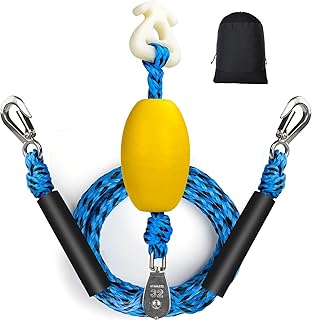
Best for 1-4 rider towables and wakeboarding. Features a 360° rotation pulley and a float to improve visibility and buoyancy, keeping the system away from propellers. The heavy-duty rope and center design reduce side-to-side sway during sharp turns.
Why chosen: The integrated pulley and buoyant design support stable towing in variable water conditions, reducing entanglement and improving safety. Use this if you frequently switch between tubes and wakeboards.
Caution: Heavy usage can stress boat fittings; inspect hardware regularly for corrosion and wear.
SELEWARE Heavy Duty Boat Tow Harness

Best for durability-focused tubers and water skiers needing high tensile strength. The 100% polyester rope balances strength with lighter weight, offering up to 2800 lbs capacity. It includes three large stainless steel hooks for secure connections.
Why chosen: Durable construction and simple connections make it a reliable all-around option for frequent towing of tubes and wakeboards. It’s a solid choice when you want long-term reliability.
Caution: Slightly heavier rope may require more effort to store; plan for proper stowage on board when not in use.
SELEWARE Boat Tow Harness for Tubing

Best for tubing and universal tow rope needs. It centers the rope using a self-centering pulley and features a floating safety design with a 4″ float ball. The kit distributes pull evenly to protect gel coat during turns.
Why chosen: A good balance of strength and safety for a variety of towables. Suitable for owners who want a dependable, center-focused tow point with protective buoyancy.
Caution: The floating design helps avoid propellers but always keep clear zones around the stern during high-speed maneuvers.
Watersports Heavy Duty Tow Harness

Best for quick setup with strong attachment points. This harness includes two durable carabiner-style clips and a self-centering pulley to reduce stress on D-rings and transom. It is well suited for pontoon tow points that require straightforward connections.
Why chosen: The simple, robust design makes it ideal for boaters who want a hassle-free tow harness that works reliably with minimal adjustments. It’s a good option for frequent on-off use.
Caution: Ensure your tow points and hull fittings are rated for the combined load; inspect routinely for wear and corrosion.
Buying Guide: Pontoon Tow Rope Essentials
What should you look for when buying a pontoon tow rope?
Key factors include tensile strength, buoyancy, and a centered towing mechanism. A harness with a self-centering pulley helps keep the line aligned with the stern, reducing side-to-side sway during turns. Buoyancy improves visibility and retrieval, while corrosion-resistant hardware extends life on salt or freshwater.
Which features improve safety on the water?
Buoyant floats, secure stainless steel hardware, and 360° swivels minimize tangles and propeller risk. A floating safety design keeps lines away from moving parts, lowering the chance of entanglement during sharp turns.
How should I size and set up a tow harness?
Choose a length that matches your stern clearance and typical wakeboard or tube demands. Longer lines are better for larger pontoons, but may add drag. Always match the rope strength to the expected rider count and weight, and inspect connections before each trip.
Maintenance and safety reminders
- Rinse with fresh water after use in salt or chlorinated water and dry before storage.
- Inspect rope for frays and knots; replace if damaged.
- Tighten and check hooks and pulleys for corrosion and wear.
- Avoid entanglement by keeping lines clear of propellers and hull hardware.
Frequently Asked Questions
- What is a self-centering tow harness? It uses a pulley and centerline design to keep the rope aligned with the stern, improving stability during turns.
- What is the typical maximum load for these harnesses? Most options listed handle several thousand pounds of tension, suitable for multiple riders or heavy wakeboard tubes.
- Do tow harnesses require special mounting on a pontoon? They work with standard stern tow points and should be compatible with common boat fittings; confirm your boat’s specifications.
- Is buoyancy important? Yes, floats and foam sections improve visibility and help prevent lines from sinking or getting caught in propellers.
- Can I mix and match rope and harness parts? It’s best to use compatible components from the same system or verify compatibility with the manufacturer’s guidelines.