
Best Running Shoes for Marathon Runners: Top Picks for Distance Training
Answering the needs of serious marathon runners, this guide highlights five top-performing running shoes designed to support long miles, stable rides, and efficient turnover. Each pick targets a distinct runner profile—whether you chase speed, endurance, or trail versatility. Read on to find the best match for your training plan and race-day goals.
| Product | Best For |
|---|---|
| Men’s Charged+ Assert 11 Running Shoes | Daily training with comfort and midfoot support |
| Men’s FuelCell Supercomp Elite V5 | Speed workouts and race-day tempo efforts |
| Men’s FuelCell Rebel V5 | Long runs with responsive cushioning |
| Fuga EX330 Men’s Trail Running Shoes | Trail miles and mixed-terrain training |
| Unisex Hyperion Elite 5 Neutral Race Shoe | Race-day speed and competition |
Men’s Charged+ Assert 11 Running Shoes

The Men’s Charged+ Assert 11 prioritizes everyday comfort and midfoot support, making it a strong choice for marathon training runs that demand durability and a softer ride. The athletic mesh upper includes leather overlays to add structure without creating bulk, while the Charged+ midsole cushions each step for long miles.
Best for: Runners seeking a comfortable daily trainer with reliable stability during high-mileage weeks. The shoe’s outsole provides traction and durable wear with strategically placed flex grooves to aid toe-off on long runs.
Caution: The blend of mesh and leather may feel roomier for some feet; ensure a proper fit to avoid unnecessary movement during long sessions.
Men’s FuelCell Supercomp Elite V5
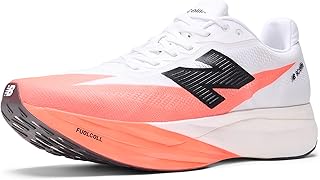
The FuelCell Supercomp Elite V5 is engineered for sprinting speed and track-like tempo workouts, with a high-energy FuelCell midsole made with PEBA and a carbon-fiber plate geometry to maximize energy return. This design emphasizes forward propulsion, making it a strong option for marathoners who incorporate fast-paced intervals into their training.
Best for: Marathoners who incorporate powerful tempo runs and speed work, and want a lightweight shoe that delivers quick response and energy return.
Caution: Not ideal for long, comfortable easy runs due to its aggressive propulsion profile and race-oriented geometry; use for targeted speed sessions and shorter workouts.
Men’s FuelCell Rebel V5

The Rebel V5 delivers a propulsive yet versatile ride with FuelCell foam for a responsive underfoot feel. The FantomFit bonded upper provides a secure, race-inspired fit without bulk, while a wider, higher-stacked midsole offers added cushioning for longer runs.
Best for: Marathon trainees seeking a balance of cushioning and responsiveness for long runs and occasional speed efforts.
Caution: The upper construction is lightweight and bonded, which may feel less forgiving for runners who prefer a more traditional, roomy fit.
Fuga EX330 Men’s Trail Running Shoes

The Fuga EX330 is built for trail runners who log long distances on diverse terrain. The Vibram Megagrip outsole with Traction Lug geometry provides grip and propulsion across rocky, muddy, and uneven surfaces. A supercritical foam midsole adds cushioning and energy return for sustained trail miles.
Best for: Marathoners who mix road and trail training or race on mixed-terrain courses, needing reliable grip and rugged durability.
Caution: The outsole and midsole focus on trail performance; if you primarily run on roads, a road-specific model may feel more efficient on smooth pavement.
Unisex Hyperion Elite 5 Neutral Race Shoe

The Hyperion Elite 5 is a purpose-built race shoe featuring DNA Gold cushioning and a SpeedVault Race+ carbon plate. Designed to maximize energy return and speed, it is suitable for competitive marathoners during race-pace workouts and peak-speed sessions.
Best for: Runners aiming for peak performance on race day or fast workout days, prioritizing speed and propulsion over long-range comfort.
Caution: This is a low-stack race shoe with a responsive ride; plan for shorter runs in these models to avoid fatigue during long training weeks.
Buying Guide: Key Considerations For Marathon Shoes
- Foot Type And Fit: Consider width, arch height, and volume. A secure upper reduces wasted energy on long miles.
- Midsole and Cushioning: Trade-offs exist between softness and energy return. Long runs benefit from a balanced mix of cushioning and stability.
- Weight Versus Stability: Lighter shoes boost turnover but may offer less support. Heavier trainers can reduce fatigue on long runs for some athletes.
- Terrain Compatibility: Road-specific shoes excel on pavement; trail shoes provide grip and rock-guard protection. Mixed-terrain training benefits from versatile designs.
- Durability: Long miles demand durable outsoles and sturdy uppers. Factor wear patterns and weather exposure into your choice.
- Energy Return: Carbon plates and high-energy foams aim to boost efficiency on race days, but they may alter ride feel for easy runs.
- Shoe Longevity: Many marathoners rotate two pairs to extend life and maintain consistent performance.
Frequently Asked Questions
- What type of running shoes are best for marathons?
– A balanced option with cushioning for long miles, stability for fatigue management, and a responsive ride for efficiency is ideal. - Should I choose a race-day shoe or a training shoe for a marathon plan?
– Use a dedicated race-day shoe for the actual event, and a comfortable training shoe for most long runs and easy days. - Can I use trail shoes for marathon training on roads?
– Road-shoe designs are typically better for pavement; trail shoes may be heavier and have more aggressive tread that isn’t ideal on smooth surfaces. - How often should I rotate my marathon shoes?
– Many runners rotate two pairs to maintain consistent feel and extend overall shoe life. - What should I test during a fit before buying?
– Check for toe room, heel lockdown, arch support, and overall comfort during a longer stride simulation.