
Best Ultra Wide Angle Binoculars for Wide Views and Clear Eye-Opening Moments
Answering the need for expansive horizons, these ultra wide angle binoculars deliver broad fields of view and bright images across astronomy, sports, birding, and outdoor adventures. The top picks below are ideal for stargazing, following fast-moving events, and scanning wide landscapes. The best fit varies by use: astronomy fans want very wide true fields of view; sports spectators need a huge field for fast action; birdwatchers benefit from bright, edge-to-edge clarity; and travelers appreciate compact, stable options.
Summary of selected products:
- Celestron SkyMaster Gemini 2×40 Ultra-Wide Low-Power Astronomy Binocular — best for wide-sky astronomy learners and constellations.
- MOVE SHOOT MOVE 5×25 Ultra Wide Angle Binoculars — best for wide-field field viewing at sports and events.
- SVBONY SV407 Astronomy Binoculars 2.1x42mm — best for astronomy with a true wide field and bright stars.
- Celestron Cometron 7x50mm Astronomy Binoculars — best for beginners wanting a bright, wide view of the night sky.
- 15×55 UHD Binoculars — best for distant detail with a wide field at higher magnification.
Celestron SkyMaster Gemini 2×40 Ultra-Wide Low-Power Astronomy Binocular
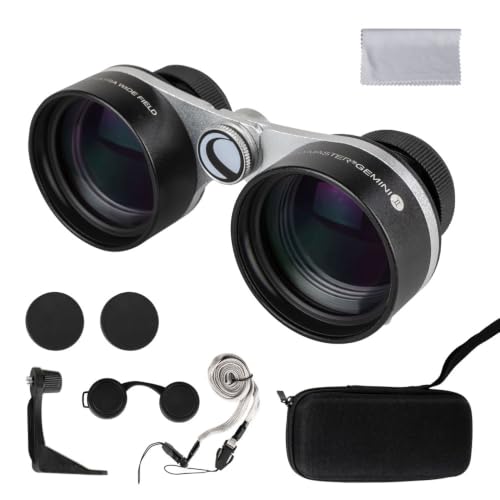
Best for: beginners and sky-navigators who want a broad, low-mMagnification view of the night sky. The 24° true field of view helps you locate constellations quickly and move between stars with ease. The 2x magnification keeps images steady and natural, ideal for sweeping the Milky Way and spotting comets or meteor showers. Large 40mm objectives gather light for bright celestial scenes.
Why selected: This model prioritizes a wide true field and comfortable viewing at low magnification, which is especially helpful when learning to navigate the night sky. The large objective lenses improve brightness, making it easier to distinguish star groups in sparse areas.
Caution: With only 2x magnification, you may miss fine details on very distant objects compared to higher power binoculars. Best used for wide-field scanning rather than close-up planetary observations.
MOVE SHOOT MOVE 5×25 Ultra Wide Angle Binoculars

Best for: sports spectators who want to follow action across the field without constant scanning. Its ultra-wide 15.8° field of view (per the listing) outperforms typical binoculars, helping you keep all the action in view as it unfolds. The pair is compact and relatively light, aiding portability and quick use at events.
Why selected: A strong choice for stadiums, arenas, and outdoor events where tracking players and plays benefits from an expansive field. It’s designed for easy handling during long viewing sessions.
Caution: The product emphasizes wide view over extreme magnification. It is not ideal for high-detail distant viewing or celestial use.
SVBONY SV407 Astronomy Binoculars 2.1x42mm
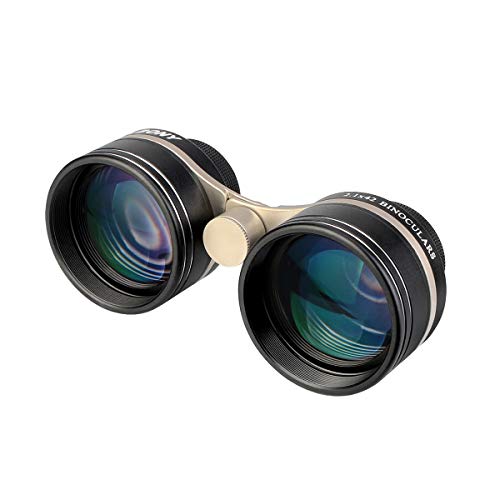
Best for: stargazers who want a wide field with a comfortable view close to the naked eye. The 26° wide field and FMC coating help deliver brighter, clearer constellations across a broad area of the sky. The design supports staying on the stars from near to far without constant refocusing.
Why selected: The SV407’s wide field and optical coatings aim for bright, distinct star fields, which is valuable for beginners learning to identify constellations and for casual observers who want an immersive sky experience.
Caution: Lower magnification means fewer close-up details of distant lunar or planetary features. Best used for wide-field stargazing instead of planetary detail work.
Celestron Cometron 7x50mm Astronomy Binoculars

Best for: beginners who want a bright, wide field to explore the night sky and planetary belts. The 7x magnification is beginner-friendly and the 50mm objectives maximize light transmission for expansive views of constellations and comets.
Why selected: It balances affordability with broad field viewing, making it a practical starting point for those new to astronomy or casual sky gazing.
Caution: Higher magnification options can reveal more detail, but this model emphasizes ease of use and wide-field scanning over high-precision close-ups.
15×55 UHD Binoculars — Large View

Best for: adults who want a high-power, wide-angle experience for birding, marine watching, and distant landscapes. The 15x magnification pairs with an 8° wide field to deliver detailed yet broad views at medium distance.
Why selected: The combination of 15x power with a relatively wide field supports both distant observation and context, making it a versatile option for wildlife and outdoor viewing.
Caution: Higher magnification reduces the apparent field of view and can increase hand-shake. Use a stable stance or a tripod for steady viewing in extended sessions.
Buying Guide: Ultra Wide Angle Binoculars
- Field of View: Look for a true wide-angle percentage or degree measurement. A larger FOV makes it easier to locate and track moving targets or fit expansive celestial patterns in frame.
- Magnification vs Brightness: Ultra wide does not always mean high magnification. Low to mid magnification often yields brighter images with a wider view, which is preferable for astronomy and sports scanning.
- Objective Lens Size: Larger objectives (e.g., 40–50mm) gather more light, resulting in brighter images in low light. This helps with star fields and dawn/dusk viewing but increases weight.
- Optical Coatings: Multi-coated or FMC coatings improve light transmission and contrast. Coatings reduce glare and color shifts in bright environments similar to daylight sports or twilight skies.
- Weight and Handling: Ultra wide models can be bulky. Consider models with a comfortable grip and balanced weight, especially for longer viewing sessions.
- Usage Scenarios: Choose based on primary use—astronomy, sports, birding, or travel. Low-magnification, very wide FOV is often best for astronomy beginners and field scanning; higher magnifications suit observers needing more detail at distance.
- Durability: For outdoor use, water resistance, fog proofing, and robust housing improve reliability in variable weather.
FAQ
- What is a true wide field of view in binoculars?
A true wide field of view describes the angle of the area visible through the lenses at a given distance, typically measured in degrees. It indicates how much of the scene you can see without moving the binoculars.
- Are ultra wide binoculars better for astronomy than standard binoculars?
For beginners and sky-navigators, yes. Ultra wide binoculars make it easier to locate constellations and move between bright stars. Higher magnification can reduce brightness and FOV, so balance is key.
- Is low magnification preferred for wide-field viewing?
Often yes. Low magnification preserves brightness and a broader field, which is ideal for scanning large sky areas, tracking fast-moving sports, or observing flocks of birds.
- What should I consider for travel use?
Weight, size, and durability matter most. A compact, stable pair with good eye relief and weather resistance is practical for porting between locations.
- Can I use these binoculars for both astronomy and sports?
Some models can be used across uses, but the best choice typically balances wide field with comfortable, stable viewing. For astronomy, prioritize view width and light transmission; for sports, prioritize field of view and ease of focusing.
- Do I need a tripod for high-magnification wide-angle binoculars?
Yes, for higher magnifications (e.g., 15x or more) a tripod or stable support helps prevent hand shake and preserves image clarity during extended viewing.