
Best Water Ski Rope Handle Options for Smooth Towing and Quick Control
Answering the question, choosing the right water ski rope handle improves grip, control, and safety for riders of all levels. This guide highlights five top options, explains who they’re best for, and why they stand out. Whether you’re a beginner learning to stay upright or an experienced rider chasing trickier wakes, you’ll find a solid match below. A quick buyer’s table at the start helps compare key features at a glance.
| Product | Rope Length | Handle Type | Strength | Best For |
|---|---|---|---|---|
| AIRHEAD Heavy Duty Tow Harness | 75 ft | 12-inch aluminum core | 1500 lbs | Durable, long sessions; strong grip |
| 75FT Ski Ropes for Water Skiing (QLOOASEA) | 75 ft | 13-inch EVA handle | 1600 lbs | Comfortable grip for beginners to intermediates |
| 75ft Water Ski Rope (7 sections) | 75 ft | Floating EVA handle | Not specified | Versatile for tubing and multiple riders |
| SELEWARE Wakeboard Tow Rope | 75 ft | Foam handle | 1600 lbs | Adjustable length for different riders |
| Seachoice Water Ski Rope | 75 ft | 12-inch textured rubber grip | Not specified | Easy retrieval; reliable everyday use |
AIRHEAD Heavy Duty Tow Harness

The 75-foot, single-section water ski rope uses a 12-inch aluminum core handle with a performance grip and molded finger protection. It offers a high tensile strength (1,500 pounds) and is suitable for long sessions. Best for riders who need a durable setup for wakeboarding or kneeboarding after learning the basics. A potential limitation is the heavier handle, which may feel less maneuverable for casual or younger riders who prefer lighter options.
75FT Ski Ropes for Water Skiing (QLOOASEA)

This 75-foot, 16-strand braided rope provides up to 1,600 lbs tensile strength. It includes a 13-inch EVA handle with cushioned anti-slip grip for comfort and control, making it ideal for beginners progressing to intermediate tricks. It’s built to resist sun damage and wear from dock contacts. A caution: ensure proper rope inspection for fraying before use, especially after rough launches or beach starts.
75ft Water Ski Rope With No-Peel Seamless EVA Grip

Best for riders who want quick length adjustments across sessions, including beginners through two-rider setups. The 7-section design supports easy transitions between speeds and rider levels. A potential limitation is the complexity of length changes during dynamic moves, which may require practice to optimize.
SELEWARE Wakeboard Tow Rope 75ft
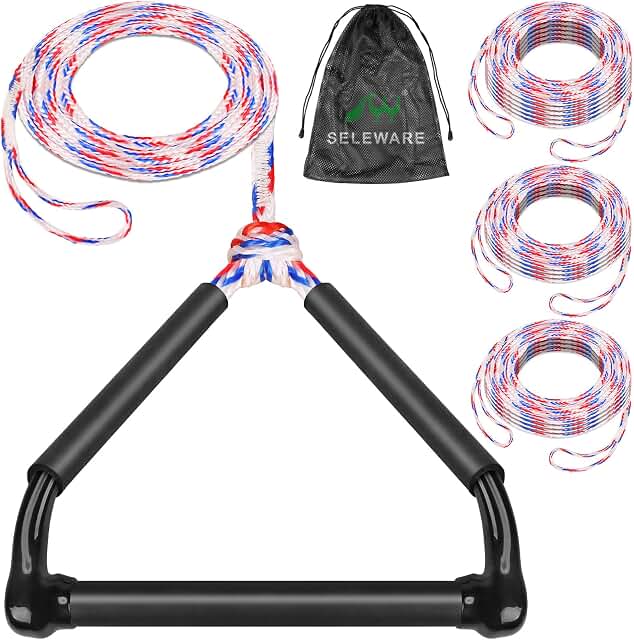
Equipped with a 1600-pound breaking strength and a foam grip, this rope is designed for comfort and durability. It features a 4-section length adjustment to suit different riders and training needs. Best for versatile use, including wakeboarding and kneeboarding. Choose this if you need quick, on-the-fly length changes; avoid if you require a fixed length for specific launch setups.
Seachoice Water Ski Rope

This rope uses a 16-strand hollow-braid polypropylene construction with a 12-inch handle that features a textured rubber grip. It floats for quick retrieval on the water, simplifying setup. Best for casual water-skiing sessions and simple tubes; best for those who value easy handling and quick water pickup. A limitation: polypropylene may absorb more water and can feel stiffer in cold conditions.
Buying Guide
What length should you choose? Most riders select 75 feet for standard wakeboard and water ski setups, but longer lines can help beginners keep distance during learning. Shorter lines offer quicker response for advanced tricks. Consider adjustable or multi-section ropes if you plan to train with multiple riders or switch between activities frequently.
What rope material matters? Polyethylene and polypropylene are common. Polyethylene offers good strength and durability, while polypropylene floats well and resists water absorption. For longevity, look for high-tensile, braided constructions. Floating handles make retrieval easier after a fall or pass.
How important is a comfortable grip? A foam or EVA handle with an ergonomic grip reduces hand fatigue during long sessions. Cushioned grips are especially helpful for beginners who need confidence in grip and control. For advanced riders, a lighter handle may improve reaction time.
How much strength do you need? Higher tensile strength supports heavier riders and aggressive towing. Common ranges are 1,600 pounds or more for versatile, all-around use. If you frequently tow tubers or wakeboarders pulling at higher speeds, prioritize strength and durability.
What about adjustability and sections? Ropes with 4-section or 7-section designs offer quick length changes to match rider skill and boat speed. This is useful for transitions from learning to performing stunts. Check whether the rope allows easy, secure shortening without snagging.
FAQ
- What length should a beginner start with? Start with 60–75 feet to build confidence and control, gradually increasing as technique improves.
- Is a foam handle better than EVA for all conditions? Foam handles provide comfort and grip; EVA is also comfortable and can be lighter. Choice depends on personal preference and grip feel.
- Do I need a high-tensile rope for casual use? Yes, higher tensile strength provides safety margins and longer rope life, especially with bigger or stronger riders.
- Should the rope float? Floating ropes and handles simplify reeling in after a fall and improve setup speed on busy days.
- Is multi-section length adjustment worth it? Yes, it helps adapt to rider weight, boat speed, and skill level without swapping ropes.
- Can I use a wakeboard rope for tubing? Some ropes are designed for tubing; verify the product’s stated compatibility and ensure it can handle the dynamic loads of tubing.