
Best Wide Mountain Bike Pedals for Stable Footing on Any Trail
Looking for wide, stable flat pedals that boost grip and rider confidence on mountain trails? This guide highlights five top options that balance platform size, grip, and durability. The ideal pick depends on your riding style and shoe size: beginners may prefer extra grip and forgiveness, while seasoned riders seek lower profile and lighter weight for better clearance. The following picks are well-suited for most trail beginners to intermediate riders and cover a range of budgets and materials.
Product Comparison Snapshot
| Product | Platform Size | Material | Best For |
|---|---|---|---|
| ROCKBROS Aluminum MTB Pedals | 101 mm wide | Aluminum | Riders needing wide support and strong grip |
| MZYRH Mountain Bike Pedals | ~105 mm x 91 mm | Alloy with sealed bearings | Racers seeking smooth spin and reliable bearings |
| OneUp Components Composite Pedals | 115 x 105 mm | Composite | Cross-country and daily riders seeking lightweight durability |
| FIFTY-FIFTY Mountain Bike Pedals (Nylon) | 106 x 104 mm | Nylon composite | Budget-friendly with strong grip |
| FIFTY-FIFTY Mountain Bike Pedals (Aluminum) | 4.2″ x 4.2″ | 6061 aluminum | Enduro, downhill, and aggressive riding |
ROCKBROS Aluminum MTB Pedals Wide Platform

- Left and right pedals are clearly marked for easy installation. The 9/16″ spindle fits a wide range of bikes, from BMX to hybrid to road.
- Built for durability with CNC aluminum construction and sealed bearings to resist water and dust.
- Wide 101 mm platform provides even foot support and improved comfort on long rides.
- Stainless steel anti-skid studs on both sides improve grip, helping to keep feet planted during technical sections.
Best for: Riders needing a wide, stable platform with strong grip and reliable bearings. Choose this for trail riders who value grip and durability over ultra-light weight.
Caution: The weight is modestly higher than some plastic or composite options, which may matter for extremely aggressive weight-saving builds.
MZYRH Mountain Bike Pedals

- Sealed bearing platform with three bearings for smooth rotation and reduced maintenance.
- Anti-slip pins provide stronger grip in wet or muddy conditions, helping prevent slips.
- Moderate weight at about 0.45 lb per pedal with a compact profile suited for versatile riding styles.
- Large contact area enhances balance and stability on rough terrain.
Best for: Riders who want a smooth spin with reliable grip across varied terrains, including novices moving toward more challenging trails.
Caution: Pins offer grip, but may require periodic checks to ensure pins remain intact after heavy riding or impacts.
OneUp Components Composite Pedals

- Large 115×105 mm platform with 10 hexagonal pins per side for secure footing on rough trails.
- Ultra-thin convex design improves grip by aligning with the natural arch of the foot and reduces pedal strikes.
- Lightweight, durable composite body with replaceable pins for extended life.
- Ideal for riders seeking a balance of weight, grip, and platform area for aggressive terrain.
Best for: Mountain riders who want a high-volume platform with excellent grip and a lightweight feel for climbs and technical sections.
Caution: Composite construction, while strong, may not match the ultimate durability of metal pedals in extreme rock gardens.
FIFTY-FIFTY Nylon Composite Pedals

- 106×104 mm large platform with 9 replaceable steel pins per side for strong grip in varied conditions.
- Durable nylon composite body with a 0.7 inch thickness to minimize pedal strikes and provide clearance.
- An affordable option that suits riders needing a broad contact area without breaking the bank.
- Best for: Entry-to-mid-level riders who want a wide, grippy pedal on a tight budget.
Caution: Nylon construction may show wear sooner under aggressive, highly abrasive terrains compared with aluminum options.
FIFTY-FIFTY Aluminum Pedals
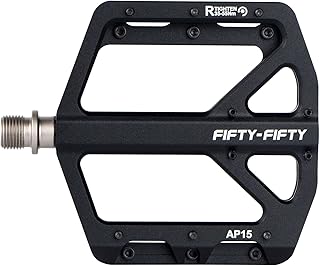
- 6061 T6 aluminum body with a strong Cr-Mo spindle provides durability in rugged conditions.
- 10 replaceable pins per side ensure grip even in muddy or wet conditions, enhancing safety.
- Ultra-thin 0.6 inch profile reduces pedal strikes and improves clearance on tough trails.
- Best for: Enduro, downhill, and aggressive riders who need a slim, sturdy platform with reliable grip.
Best for: Riders who value a combination of low profile and robust aluminum construction for high-speed or technical descents.
Caution: Heavier than some composite pedals; consider weight budget for cross-country builds.
Buying Guide: How to Choose Wide Mountain Bike Pedals
What platform size matters most?
Wider platforms distribute pressure across more of the foot, improving stability on rough terrain. If you have larger feet or ride longer distances, a platform around 105–115 mm wide is typically more comfortable and reduces pinch points.
Material matters for durability and weight
Aluminum pedals offer durability and good rigidity but are heavier than composite options. Composite pedals save weight and can be enough for riders who prioritize agility and cost. Consider your riding style and terrain when balancing weight versus durability.
Grip and pins: how much traction do you need?
More pins generally provide better grip, especially in mud or rain. Replaceable pins extend the life of a pedal. If you frequently ride in wet conditions, prioritize pedals with multiple pins per side and a secure pin design.
Bearings: sealed vs open
Sealed bearings protect spindles from water and dust, reducing maintenance and prolonging life. Open bearings are cheaper but require more care in dirty, damp environments. For adventurous riders, sealed bearings are typically the better long-term choice.
Foot compatibility and shoe size
Make sure the pedals offer enough surface area for your shoe size. Most 9/16″ spindles fit standard mountain, hybrid, and BMX bikes, but verify compatibility with your crankset and shoe width to avoid toes rubbing chainstays.
Installation and maintenance
Clear left/right markings simplify installation. Regular inspection of pins and bearings, plus occasional cleaning and lubrication, helps pedals perform reliably across seasons.
Frequently Asked Questions
- What is the standard pedal spindle size for mountain bikes? Answer: Most mountain bikes use a 9/16″ spindle, which fits a wide range of pedals and cranks.
- Are wider pedals safer on rough trails? Answer: Yes, wider platforms offer more foot stability and reduce the chance of foot slip on uneven terrain.
- Do I need bearings with weather protection? Answer: Sealed bearings are preferred for wet, muddy environments because they resist water and dust better.
- Can I replace pins on these pedals? Answer: Several models feature replaceable pins, which helps extend pedal life and maintain grip.
- Which material is best for beginners? Answer: Composite or nylon pedals provide a good balance of weight, cost, and grip for beginners learning trail technique.
- How important is pedal height and clearance? Answer: Lower-profile pedals reduce pedal strikes, especially on roots and rocks; choose thin designs if clearance is a priority.
Note: This article presents objective summaries of the listed products based on their features. Always verify current specifications on the product page before purchasing.